

TL;DR: Customer churn shows how often customers leave and signals retention health. To reduce churn, focus on clear expectations, strong onboarding, proactive and personalized support, and AI-driven signals that identify risk early and prevent avoidable cancellations.
Many businesses assume that customer churn is inevitable, or that it only happens when competitors offer lower prices.
However, customers often leave for reasons that are easier to miss, such as slow response times, unresolved issues, confusing onboarding, or a lack of follow‑up.
Even a small increase in churn can quietly erode recurring revenue over time, making it harder for businesses to grow sustainably.
In fact, a survey by PwC found that 43% of customers are willing to pay more for convenience, and 42% are willing to spend extra for a friendly, welcoming experience, making poor support a significant churn driver.
Understanding customer churn gives teams the clarity needed to pinpoint why clients disengage, spot early warning signs, and improve retention strategies.
In this article, you’ll learn what customer churn means, why it matters, the most common causes behind it, and practical strategies support teams can use to keep customers loyal.
What is customer churn?
Customer churn is the percentage of customers who stop doing business with a company over a specific time period.
It occurs when customers cancel a subscription, stop using a service, or don’t renew at the end of a contract or billing cycle.
What is customer churn rate?
Customer churn rate is a metric used to measure how many customers a business loses over a defined period, expressed as a percentage of the total customer base at the start of that period.
It is commonly calculated on a monthly or annual basis and helps businesses track how many customers they are losing over time.
Businesses often compare churn rates against industry benchmarks based on company size, market maturity, and business model.
Different types of customer churn
Customer churn is generally categorized into two main types, based on whether the customer intentionally leaves or is lost due to external or technical factors.
Voluntary churn
Voluntary churn occurs when a customer actively decides to stop using a product or service.
This typically happens when a customer cancels a subscription or chooses not to renew at the end of a billing cycle.
Some causes of voluntary churn include:
- Product dissatisfaction
- Poor customer service experiences
- Switching to a competing solution
- Unresolved customer complaints
Involuntary churn
Involuntary churn occurs when a customer is lost without making a deliberate decision to leave.
This usually happens due to payment or account‑related issues that prevent a subscription from renewing successfully.
The following are some of the causes of involuntary churn:
- Failed payment methods
- Expired or outdated billing details
- Insufficient funds
- Billing or system errors
In subscription businesses, involuntary churn can often be reduced through automated payment reminders and billing recovery workflows.
How to calculate customer churn
Customer churn rate is calculated by dividing the number of customers lost during a specific period by the total number of customers at the start of that period, then multiplying the result by 100.
Use the following formula to calculate customer churn rate:
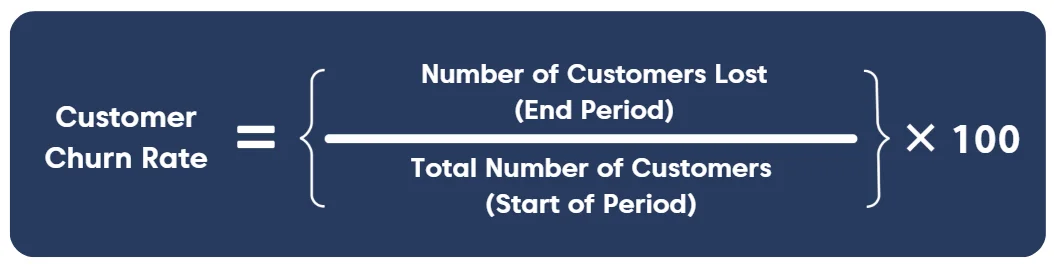
To determine the number of customers lost during the period, subtract the number of customers at the end of the period from the number of customers at the start.
Example:
Suppose a business starts the month with 1,000 customers and loses 50 customers by the end of the month.
The customer churn rate is calculated as:
Customer churn rate = (50/1000) × 100 = 5%
Why businesses track customer churn
Customer churn reflects how effectively a business retains its customers over time.
Monitoring churn helps organizations understand whether customer relationships are strengthening or weakening.
Tracking customer churn is important because it helps businesses:
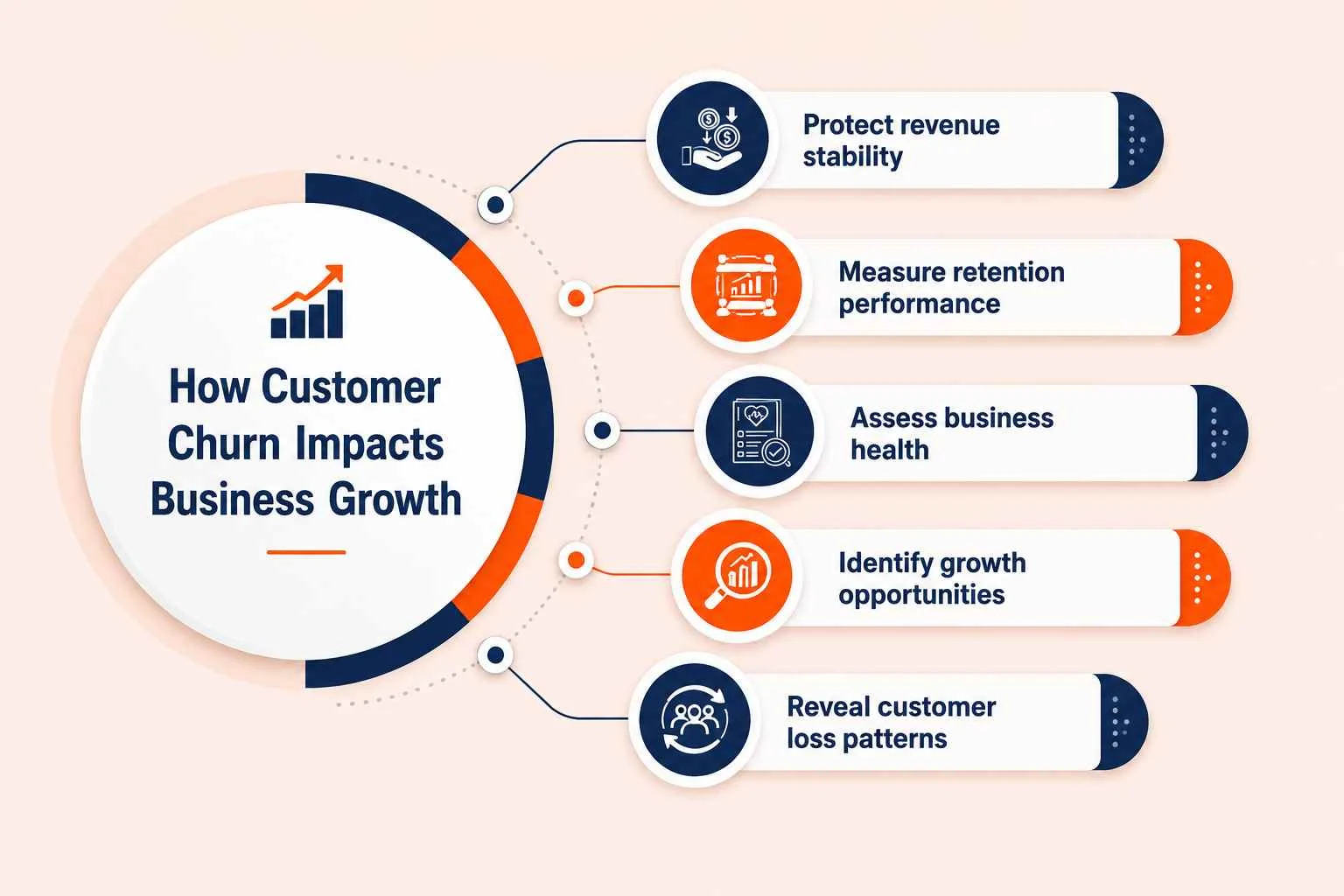
- Protect revenue stability: Each customer who leaves represents lost recurring or repeat revenue. Monitoring churn highlights whether customer losses are offsetting acquisition efforts.
- Understand customer retention performance: Churn serves as a clear indicator of how well a business is maintaining its customer base compared to industry benchmarks.
- Assess long‑term business health: Consistently high churn can signal instability, making it harder to sustain growth or attract investors.
- Identify missed growth opportunities: A shrinking customer base limits opportunities for expansion through renewals, upselling, or cross‑selling.
- Surface patterns in customer loss: Reviewing churn trends helps teams recognize recurring signals of customer disengagement that require closer investigation.
What are the root causes of customer churn?
Customer churn rarely happens without warning. In most cases, it is the result of recurring friction in the customer experience that gradually weakens trust and perceived value.
Here are some of the most common reasons customers stop doing business with a company.
- Poor customer service: Slow responses, unresolved issues, and inconsistent support interactions frustrate customers and gradually reduce confidence in the brand.
- Poor onboarding: A weak customer onboarding experience makes it difficult for users to achieve early success, understand key workflows, or realize value quickly.
- Unaddressed customer complaints: When customers repeatedly raise concerns without receiving timely, meaningful responses, it signals that their input is not valued.
- Product quality or reliability issues: Bugs, downtime, performance problems, or missing critical features erode trust and disrupt customer workflows.
- Competition: Customers may switch to alternatives that fit their needs, offer stronger features, or provide a superior overall experience.
- Payment and billing failures: Expired cards, failed payments, or billing errors may prevent renewals even when customers intend to stay.
- Value or ROI mismatch: When outcomes are unclear or results do not justify the cost, customers perceive low value and begin looking for alternatives.
- Pricing or contract friction: Price increases, confusing packaging, rigid terms, or unexpected renewal changes can trigger churn.
- Slow time-to-value: Customers who take too long to experience meaningful results may disengage before fully adopting the product or service.
Actionable tips to reduce customer churn
Reducing customer churn requires a proactive and consistent approach to strengthening engagement, building trust, and maintaining long‑term loyalty.
The following strategies outline practical actions for addressing common churn drivers.
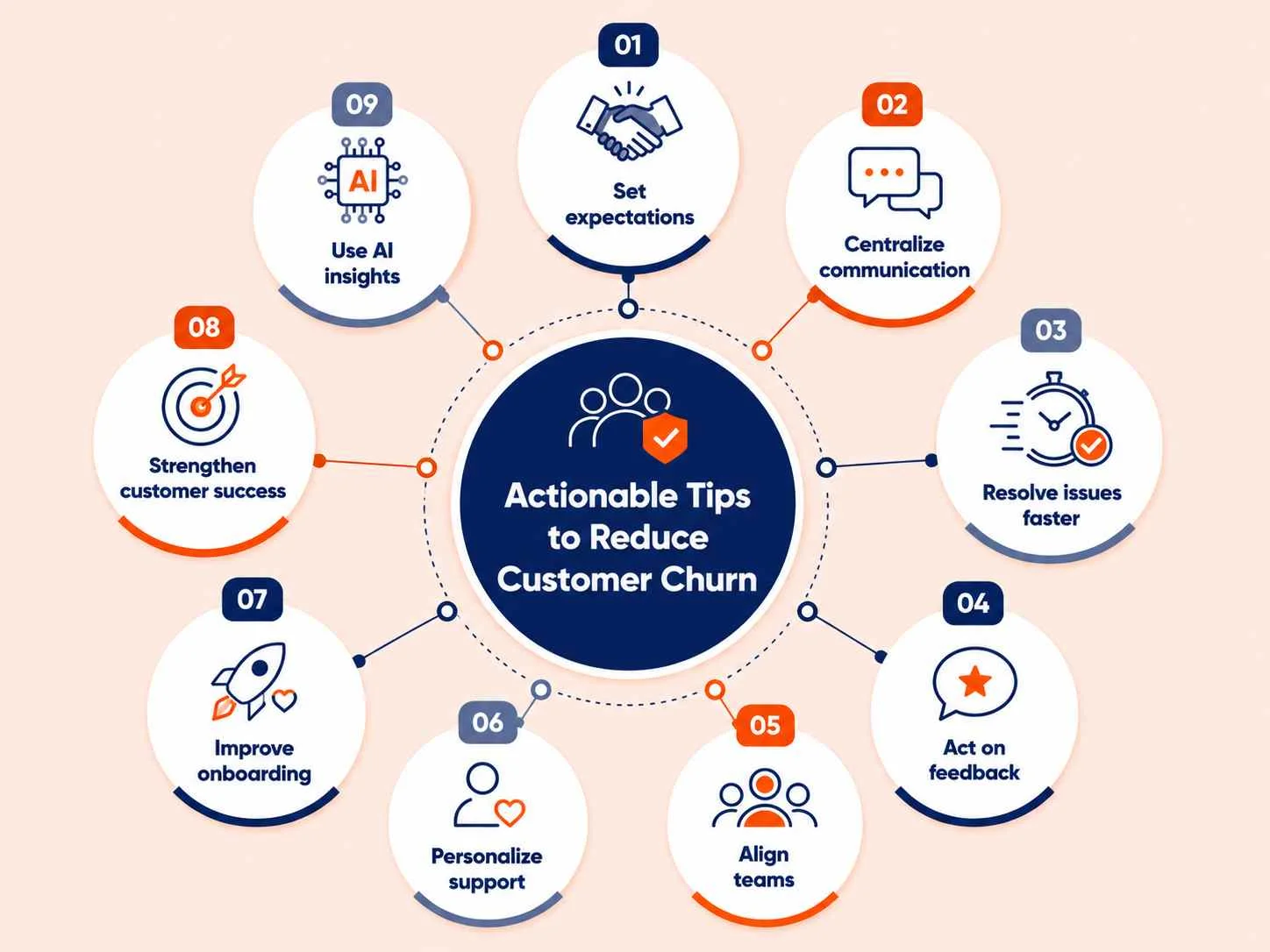
Set clear expectations from the start
Misaligned customer expectations during the sales process often lead to early dissatisfaction and churn later in the customer lifecycle.
Customers are more likely to stay when they understand what level of support and service they can expect.
Setting expectations effectively involves:
- Communicating response times, support availability, and service boundaries early
- Reinforcing expectations during onboarding, renewals, and major updates
- Being transparent about limitations to prevent future frustration
- Ensuring messaging is consistent across sales, onboarding, and support
Maintain clear communication across support interactions
Unclear or fragmented communication creates confusion, even when problems are eventually resolved.
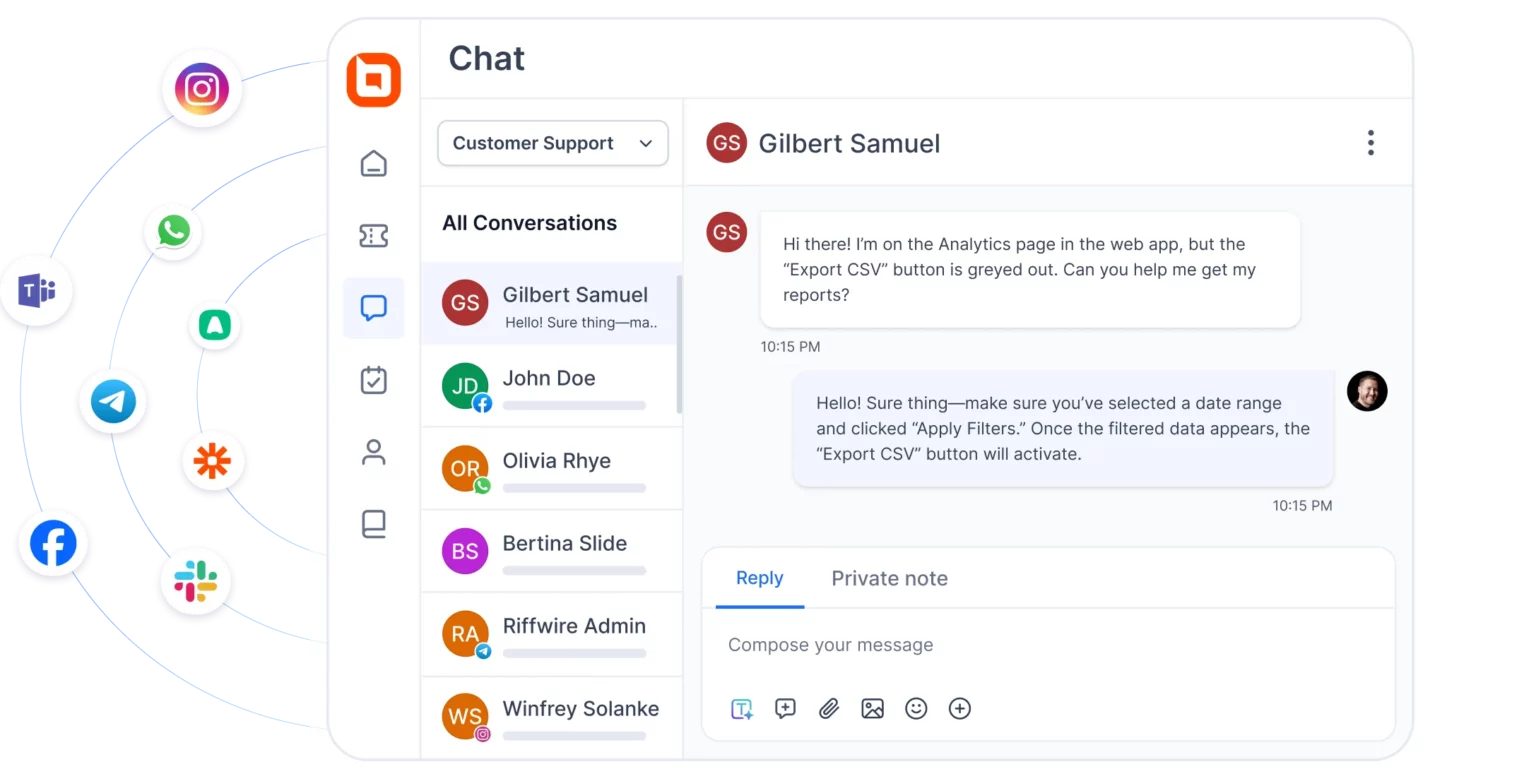
With a centralized help desk ticketing system, teams can maintain conversation history and reduce customer frustration caused by repeated explanations.
Maintaining systematic communication requires you to:
- Use an omnichannel customer service strategy that centralizes customer conversations, so context is preserved across teams
- Provide timely updates during incidents or delays
- Reduce unnecessary escalations that force customers to repeat information
Prioritize first‑contact resolution
Repeated interactions for the same issue increase frustration and erode confidence. Resolving problems quickly and completely reduces churn risk.
You can enhance first‑contact resolution by:
- Equipping agents with the authority and knowledge to resolve issues immediately
- Improving internal documentation and knowledge sharing
- Reviewing repeat issues to remove recurring blockers
- Monitoring customer service metrics such as first response times and resolution times to ensure issues are addressed promptly
Turn customer feedback into meaningful action
Customer feedback is one of the earliest signals of churn risk, especially when similar concerns surface repeatedly.
To make feedback actionable, you can:
- Collect structured feedback using CSAT and NPS surveys to measure satisfaction and loyalty trends
- Perform sentiment analysis on support conversations, chats, and emails to surface frustration or declining confidence
- Share feedback insights across support, product, and customer success teams to address issues holistically
- Close the feedback loop by informing customers when their input leads to fixes, improvements, or process changes
When feedback is paired with sentiment and review monitoring, teams gain a clearer, real‑time view of customer health and can intervene before churn occurs.
Align teams around retention goals
Customer churn increases when teams operate in silos and retention is treated as a support‑only responsibility.
To ensure effective team alignment, you need to:
- Share churn data and insights across teams regularly
- Define shared customer retention goals beyond individual departments
- Encourage collaboration around long‑term customer outcomes
Personalize support interactions
Support interactions are more effective when they reflect a customer’s context, lifecycle stage, and history.
Personalization helps reduce churn by ensuring customers receive the right level of guidance at the right time, instead of generic responses.
Personalized customer service can be achieved by:
- Using customer history and interaction context to tailor responses, especially when customers have open issues or repeated tickets
- Adjusting support approach based on lifecycle stage, such as proactive guidance during onboarding or value reinforcement during renewals
- Providing prioritized, deeper support for high‑value or long‑term accounts, where churn risk has a greater business impact
- Maintaining a natural, conversational tone while staying consistent with brand standards and customer expectations
Streamline onboarding around early success
Customers who reach value quickly and understand how your product fits into their workflow are far more likely to stay engaged long term.
An effective onboarding process focuses on reducing time‑to‑value and guiding customers toward meaningful progress early on. This includes:
- Defining activation milestones that show when customers complete key setup steps and begin experiencing value
- Guiding customers toward a few meaningful first actions, rather than overwhelming them with features
- Providing guided setup flows that help users complete critical tasks
- Using contextual onboarding, such as in‑app support, prompts, or walkthroughs, to offer help exactly when and where friction occurs
- Monitoring early customer engagement toward activation milestones to identify customers who may need extra guidance
Build stronger customer success programs
Customers who feel supported beyond initial setup and know someone is invested in their long‑term success are more likely to remain loyal.
Customer success programs focus on:
- Proactive check‑ins during key milestones or lifecycle stages
- Ongoing education and guidance as customer needs evolve
- Customer loyalty initiatives that reward long-term engagement and commitment
Use AI to anticipate needs and customer sentiment
Customer churn rarely happens without warning. Subtle changes in behavior and tone often appear long before customers decide to leave.
Using AI effectively allows teams to:
- Detect sentiment shifts such as frustration, confusion, or declining customer satisfaction across support conversations, chats, emails, and feedback
- Monitor customer behavior changes, such as reduced login frequency, fewer product interactions, or slower response times to outreach
- Generate customer health indicators by combining sentiment, usage patterns, and interaction history into actionable risk signals
- Trigger proactive outreach, so support teams can intervene before issues escalate into cancellations
Reducing customer churn with a sustainable support strategy
Customer churn is inevitable to some extent; no business retains every customer forever.
However, when churn becomes consistently high or continues to rise, it signals deeper issues that require attention.
By tracking churn trends and understanding why customers leave, teams can identify recurring friction, address gaps early, and make informed improvements over time.
With the right tools and processes in place, support teams can move from reacting to churn to actively preventing it.
BoldDesk helps teams identify churn risks earlier, centralize support conversations, automate follow-ups, and resolve customer issues before they lead to cancellations.
Start a 15-day free trial or request a live demo to see it in action.
You can also contact our team to learn how we can support your retention goals.
Related articles
- Customer Follow-Up: Effective Ways to Do It (+ Benefits)
- 8 Best Ways of Delivering Efficient Customer Service in 2026
- Great Customer Service Skills Every Support Team Needs in 2026
- 10 Tips to Improve First Response Time in Customer Service
Frequently Asked Questions
A good customer churn rate varies by industry, business model, and customer segment. For most SaaS businesses, a monthly churn rate below 2–5% is generally considered healthy.
Comparing churn against industry benchmarks and tracking trends over time is more important than relying on a single, ideal number.
Customer churn typically refers to customers who actively cancel or stop using a product.
Customer attrition is a broader term that includes both voluntary and involuntary customer loss.
Revenue churn measures the amount of recurring revenue lost due to cancellations or downgrades.
Metrics such as customer retention rate, customer lifetime value (CLV), repeat purchase rate, product usage frequency, and support ticket trends help identify churn risk early.
Tracking engagement and satisfaction indicators alongside churn provides a clearer picture of customer health.
Early warning signs of customer churn include reduced product usage, repeated complaints, declining engagement, delayed responses, and lower customer satisfaction scores such as CSAT or NPS.
AI helps minimize customer churn by detecting early warning signs, such as declining usage, negative sentiment, or repeated issues, across large volumes of data.
These insights allow teams to prioritize at-risk customers and take proactive action before churn occurs.
Customer churn directly impacts revenue, growth potential, and long-term profitability, especially in subscription-based businesses.
High churn also increases acquisition costs, weakens customer relationships, and can signal deeper issues with product value or support.