



TL;DR: AI agents for ecommerce can increase revenue by automating high-impact customer interactions across the buying journey. They respond instantly, guide customer decisions, and personalize experiences at scale. This helps convert more visitors, increase repeat purchases, and improve overall efficiency.
Many ecommerce brands focus on driving more traffic, but the bigger opportunity often lies in converting more of the visitors they already have.
Every day, shoppers add products to their carts, reach checkout, and leave without completing a purchase.
A question about shipping, product compatibility, delivery timelines, or return policies can create enough uncertainty to stop a sale. This challenge is becoming more costly.
According to a Statista report, cart abandonment has risen since 2014, exceeding 70% globally in 2026, a rise of more than 10 percentage points.
Ecommerce AI agents step in at these moments by answering questions, reducing hesitation, and guiding shoppers in real time.
The result is more completed purchases, fewer abandoned carts, and consistent business growth.
In this article, we’ll show you exactly how leading ecommerce brands are using AI agents to drive fast, measurable growth and how to achieve measurable impact within six months.
AI agents for ecommerce help increase revenue by answering shopper questions instantly, reducing cart abandonment, recommending relevant products, automating post-purchase support, and improving repeat purchases. They work best when connected to product, order, inventory, and customer data.
What are AI agents for ecommerce?
An ecommerce AI agent is intelligent software that understands customer needs, connects to live business data, and takes independent actions to resolve issues or guide shoppers through their buying journey.
Unlike traditional chatbots that rely on scripts, AI agents can interpret context, reason through intent, and make real‑time decisions.
Key capabilities of ecommerce AI agents include:
- Autonomous decision-making: AI agents understand customer intent and determine the most appropriate response or action without requiring human intervention.
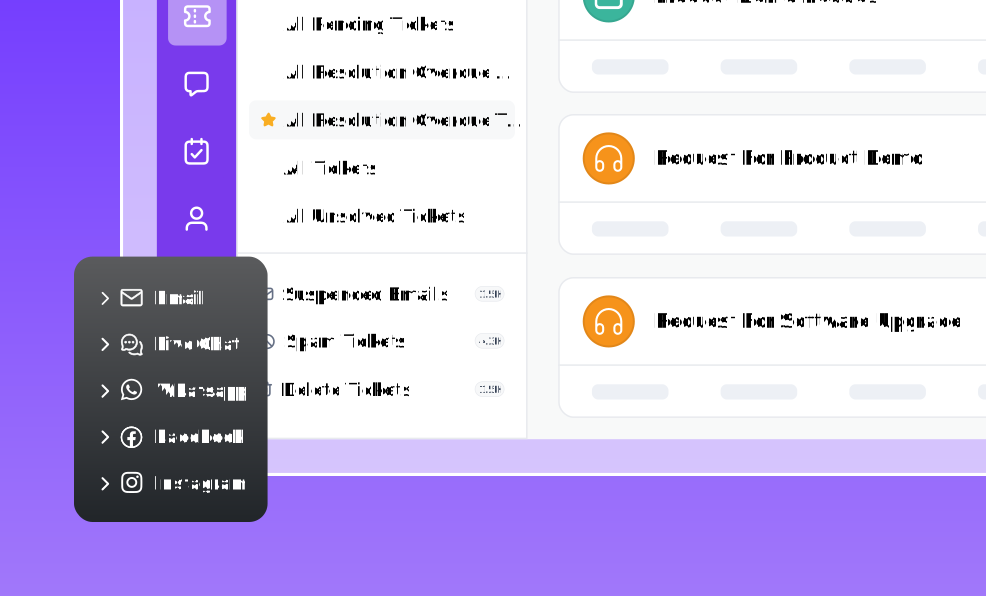
- Omnichannel support: A single AI agent can assist customers across websites, mobile apps, live chat, messaging platforms such as WhatsApp, and voice channels while maintaining conversation context.
- Real-time, data-driven assistance: By accessing products, orders, inventory, and customer history, AI agents provide relevant, personalized responses that reflect what is happening in the business at that moment.
In ecommerce customer service, AI agents can proactively recommend products, track orders, process returns, and deliver personalized experiences that improve satisfaction while reducing the workload on support teams.
Key differences between traditional ecommerce automation and modern ecommerce AI agents
As ecommerce evolves, businesses are moving beyond rigid automation systems toward more intelligent solutions that can handle complexity, improve customer experience, and unlock new revenue opportunities.
Here’s how they compare:
| Aspect | Traditional ecommerce automation | Modern AI agents for ecommerce |
| Response logic | Rule-based triggers and scripts | Context-aware responses driven by intent |
| Personalization | Segment-based (broad targeting) | Individual, real-time personalization |
| Flexibility | Rigid workflows that break outside defined paths | Adapts dynamically to changing customer behavior |
| Actions | Limited to predefined workflows | Takes autonomous actions within set boundaries |
| Handling uncertainty | Fails or escalates when queries are unexpected | Interprets intent and responds intelligently |
| Channel coverage | Often siloed (email, chat, etc.) | Unified across web, chat, messaging, and more |
| Customer experience | Reactive and transactional | Proactive, conversational, and guided |
| Primary goal | Reduce support workload and costs | Drive conversions and increase sales |
How ecommerce support AI agents increase revenue for online stores in 6 months
For many ecommerce brands, customer support is still treated as a cost center.
However, modern AI support systems are reshaping this perception by transforming support interactions into powerful conversion-generating opportunities.
Here’s how AI-driven support contributes directly to measurable business impact for online stores.
1. Reduce cart abandonment with real-time support
Cart abandonment is one of the biggest challenges in ecommerce. Shoppers often leave their carts because of unanswered questions about pricing, shipping, product details, return policies, or payment options.
AI support agents solve this by giving instant, relevant answers right when customers need them most.
Instead of waiting for a human representative, shoppers get real‑time guidance during critical buying moments.
By removing hesitation and uncertainty, intelligent agents turn abandoned carts into completed purchases, recovering sales that would otherwise be lost and boosting overall sales.
2. Provide 24/7 customer support across every time zone
Online stores operate around the clock, but support teams typically do not. AI agents eliminate this limitation by delivering 24/7 support regardless of business hours or customer location.
Whether a shopper is browsing late at night or making a purchase from another country, they can receive immediate answers to their questions.
This constant availability helps to capture sales opportunities that might otherwise be lost when customers cannot access support at the moment they need it.
3. Deliver instant order tracking and post-purchase assistance
Beyond the point of purchase, customers frequently reach out for updates on order status, delivery timelines, or return processes.
AI agents handle these routine interactions instantly by integrating with order management and shipping systems. This enables customers to access accurate, real-time information without delays.
The result is a smoother post‑purchase journey that not only reduces support workload but also increases satisfaction, encourages repeat purchases, and builds stronger long‑term relationships.

4. Turn support conversations into revenue opportunities
Traditional support interactions focus on resolving issues. AI agents can also identify buying signals and help move shoppers toward a purchase decision.
For example, when a customer asks about product suitability, sizing, compatibility, or delivery options, the AI agent can provide relevant information that removes uncertainty and helps the customer buy with confidence.
By reducing decision friction at critical moments, support conversations become conversion opportunities that directly contribute to sales growth.
5. Automate upselling and cross-selling
Ecommerce support AI agents increase average order value by recommending upgrades, bundles, add-ons, and complementary products at the right moment.
By analyzing customer behavior, purchase patterns, and product relationships, AI agents can surface higher-value alternatives or additional items that genuinely enhance the customer’s purchase.
Because these recommendations are contextual and timely, they improve order value without disrupting the shopping experience.
6. Deliver hyper-personalized product recommendations
One of the biggest challenges in ecommerce is helping shoppers quickly choose the right product from large catalogs. AI agents simplify product discovery by analyzing browsing behavior, preferences, purchase history, and customer intent in real time.
Instead of forcing shoppers to search through large catalogs, AI agents guide them toward the products most relevant to their needs.
This shortens the path to purchase, improves conversion rates, and creates a more personalized shopping experience that encourages long-term loyalty.
Key benefits of AI agents for ecommerce brands
The benefits below show how AI agents go from being a useful tool to becoming a direct revenue multiplier across the entire business.
- Increased conversion rates: AI agents reduce real-time friction by answering questions, guiding decisions, and addressing objections instantly, helping more high-intent visitors complete their purchase.
- Higher average order value: By surfacing the most relevant products, bundles, and upgrades at the right moment, AI agents encourage customers to add more to their cart and increase spend per order.
- Stronger customer retention and repeat purchases: Continuous personalized engagement and proactive post-purchase support keep customers connected to the brand, driving more frequent repeat purchases and higher lifetime value.
- Lower operational costs with higher efficiency: Automating support, workflows, and routine tasks frees up teams and reduces costs, allowing businesses to scale faster while improving overall profitability.
Examples of how ecommerce AI agents drive revenue growth
The impact of AI agents becomes clearer when viewed through real customer interactions.
Here are three common ecommerce scenarios where AI-powered support directly contributes to higher conversions, increased order values, and stronger customer loyalty.
Scenario 1: Recovering an abandoned cart before the customer leaves
A customer hesitates at checkout and asks if their running shoes will arrive before an upcoming event.
The ecommerce customer service AI agent instantly confirms that expedited delivery will meet the deadline.
With uncertainty removed, the customer completes the purchase with confidence.
Impact: The AI agent prevents cart abandonment, improves conversion rates, and captures a sale that may otherwise have been lost.
Scenario 2: Turning a support request into a larger purchase
After buying a camera, a customer asks about compatible memory cards, and the AI agent for ecommerce not only answers but recommends relevant add-ons like a case and warranty.
The customer then adds multiple items based on these tailored suggestions.
Impact: Increases average order value through personalized upselling and cross-selling opportunities during a routine support interaction.
Scenario 3: Creating a repeat customer through exceptional post-purchase support
A customer requests order tracking and an address change, and the ecommerce AI agent resolves both instantly with real-time updates and guided actions.
On a later visit, the system uses past purchase data to recommend relevant products, leading to another purchase.
Impact: Faster issue resolution improves customer satisfaction, strengthens loyalty, and increases customer lifetime value through repeat purchases.
How to get started with AI agents for your ecommerce store
Deploying AI agents requires a structured approach. It’s not a “set it and forget it” process.
The most successful ecommerce brands treat AI agents as core operational tools. They introduce them with clear goals and measurable outcomes.
Here’s how to implement AI agents for your ecommerce store:
- Identify high-impact friction points: Start by pinpointing where customers drop off or slow down, such as cart abandonment or product confusion, so agents can apply where they can drive immediate value.
- Connect your core ecommerce stack: Integrate the AI agent with your ecommerce platform, CRM, inventory, and help desk tools to ensure it has the context needed to make informed decisions and take meaningful action.
- Begin with a single, focused agent: Launch one agent, often customer service or post-purchase support, to solve a specific problem well before expanding into sales, retention, or optimization use cases.
- Measure business impact: Track outcomes like conversion rate, AOV, repeat purchases, and resolution speed rather than surface metrics like message volume or ticket deflection.
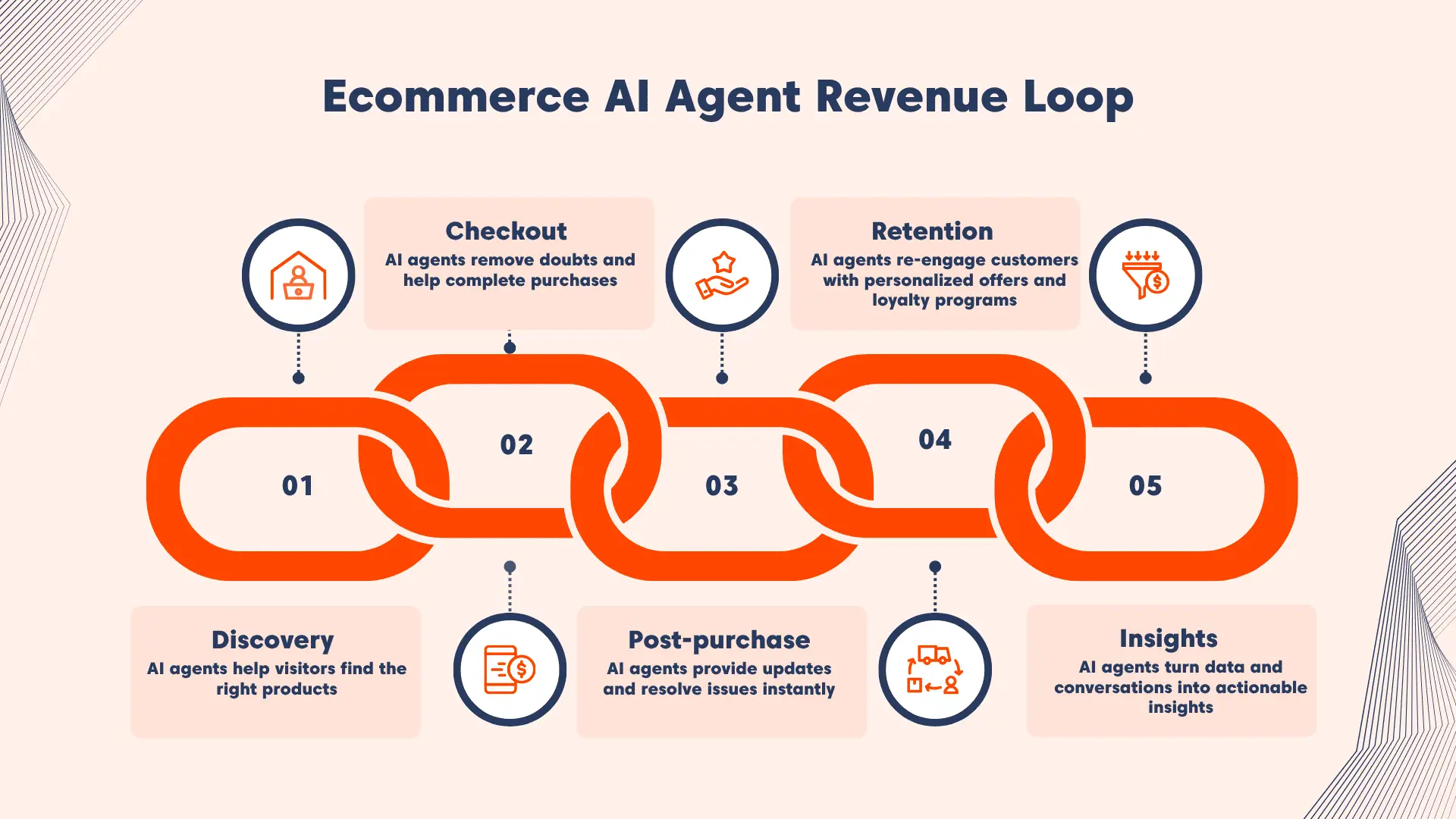
- Scale into a multi-agent system: Once value is proven, deploy specialized agents across the funnel, such as discovery, checkout, post-purchase, and retention, creating an always-on, coordinated growth engine.
- Continuously optimize performance: Review agent decisions, customer interactions, and business results regularly to identify opportunities for improvement and ensure agents remain aligned with changing customer expectations and business goals.
When implemented strategically, AI-powered ecommerce agents become a scalable layer of execution that improves performance without complexity.
How BoldDesk drives revenue for ecommerce brands
Ecommerce business growth does not come only from acquiring more traffic; it comes from converting more of the traffic you already have and protecting the value you’ve already captured.
BoldDesk helps you do both by turning customer support into a faster, more consistent, and more scalable growth engine.
Scale support for improved margins
As order volume grows, support demand increases. BoldDesk’s AI Agents automate high-volume queries like WISMO and handle repetitive requests without requiring additional headcount.
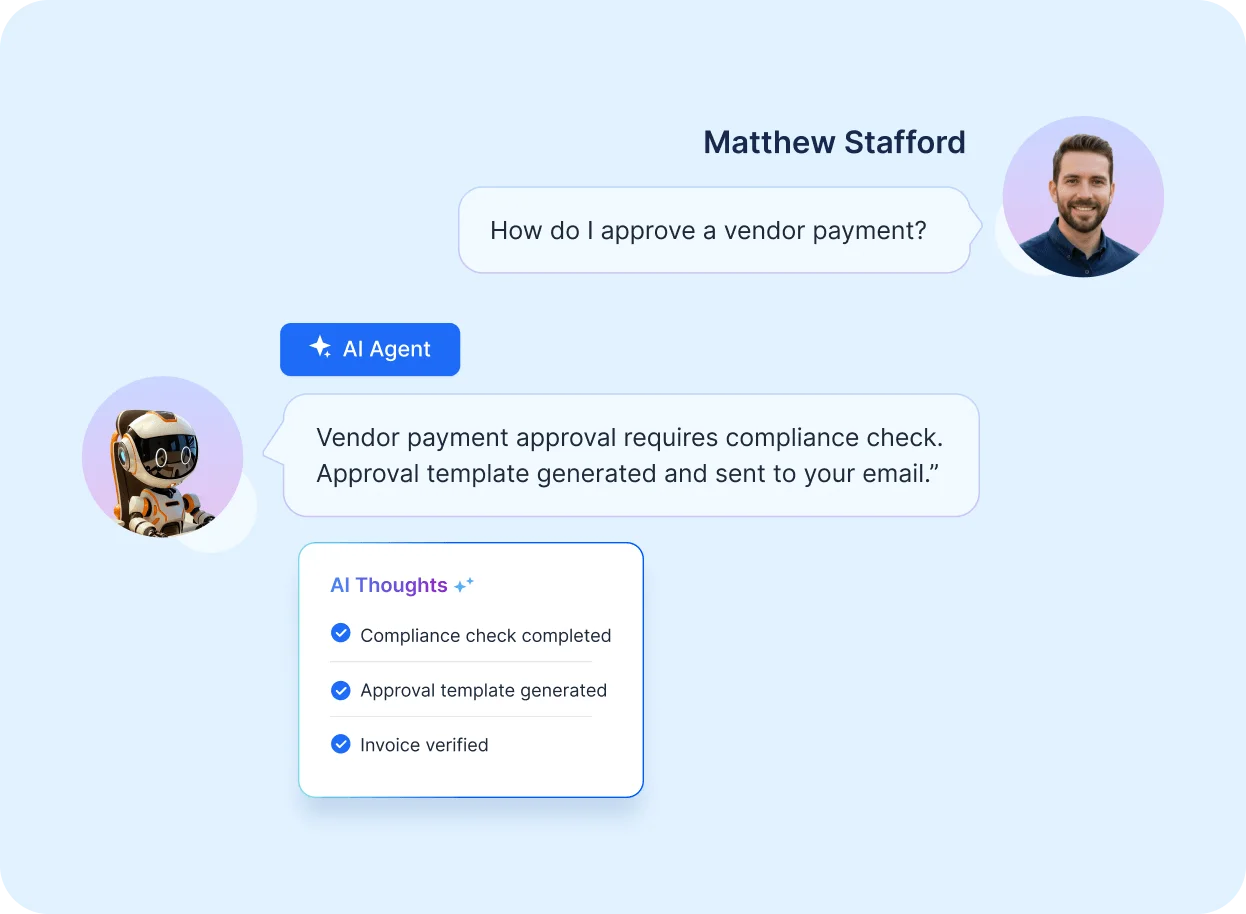
BoldDesk also lets you create and deploy specialized AI agents for different ecommerce workflows, such as pre-purchase support and product recommendations, ensuring each interaction is handled with the right context and expertise.
This lowers cost per resolution while maintaining fast, consistent responses, freeing up resources to invest in growth initiatives like acquisition, retention, and onsite optimization.
Real-world example
ConsultorsBPM struggled with fragmented customer interactions across channels, leading to inefficiencies and increased manual effort as support demand grew.
By implementing BoldDesk, they centralized support operations and streamlined ticket management, enabling faster request handling and more efficient scaling without compromising service quality.
Convert more shoppers by removing purchase friction
High-intent shoppers often pause to ask last-minute questions that directly impact purchase decisions.
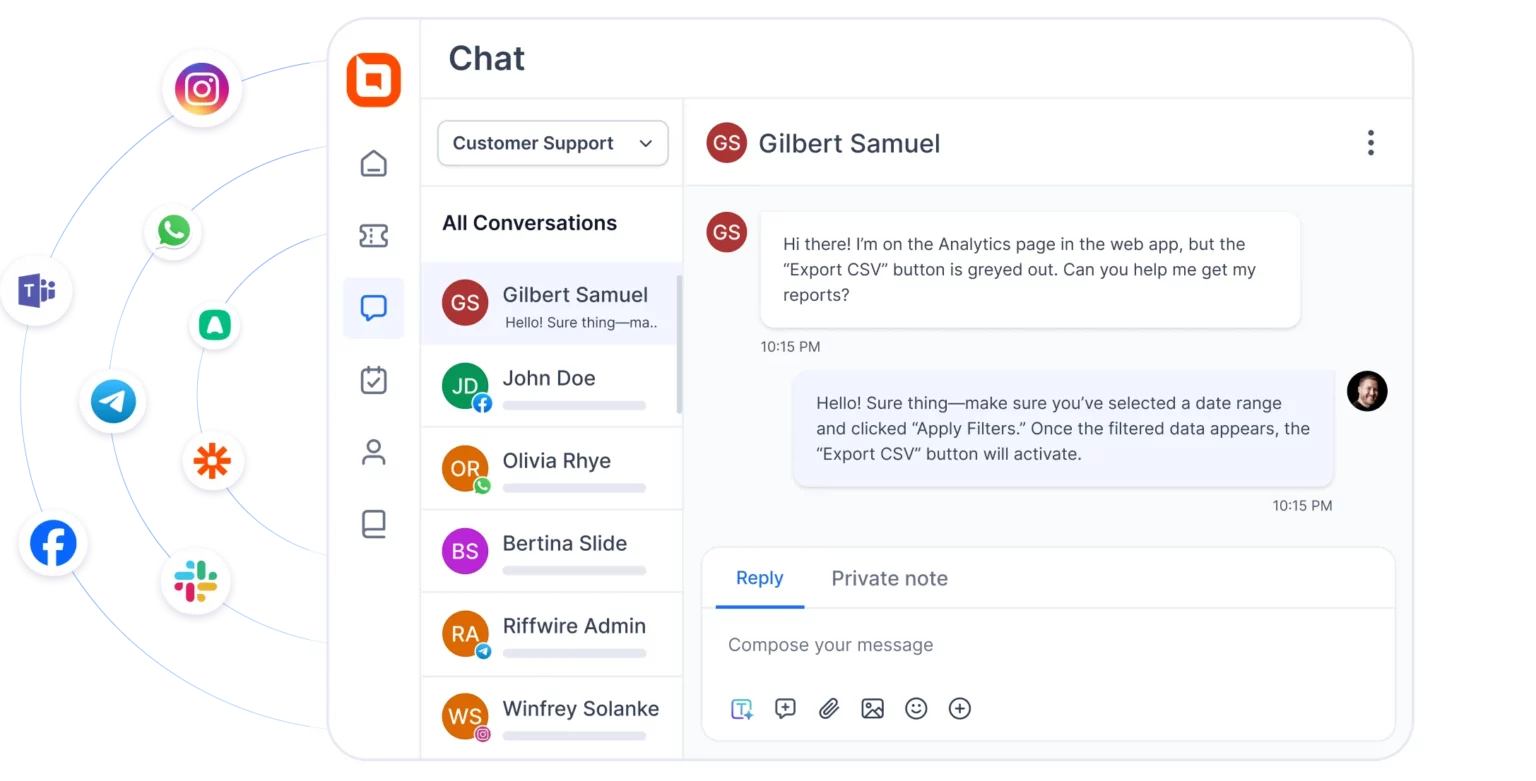
BoldDesk delivers a seamless omnichannel customer experience with real-time, AI-assisted responses across channels, ensuring customers get immediate, accurate answers when it matters most.
Faster responses and reduced friction translate directly into higher conversion rates, especially during peak traffic periods.
Protect post-purchase value (reduce cancellations, refunds, and chargebacks)
Post-purchase is where many ecommerce brands silently lose value through cancellations, refunds, and chargebacks.
With AI-powered workflows and automation, BoldDesk enables faster issue resolution, consistent policy enforcement, and smarter next-step recommendations, such as offering exchanges before refunds.
This reduces revenue leakage while improving customer satisfaction.
Real-world example
IIC Lakshya faced delays and inefficiencies in handling growing support requests, making it harder to maintain consistent response times.
With BoldDesk’s automation features, they streamlined ticket assignment and workflows, reducing resolution time by about 35% and improving ticket closure rates to manage higher support volumes more efficiently.
Increase repeat purchases by improving the support experience
Customers who receive fast, accurate, and seamless support are far more likely to return.
BoldDesk combines AI automation with a structured ticketing system and collaboration tools, ensuring every interaction is resolved efficiently and consistently.
This builds trust, strengthens customer relationships, and drives repeat purchases and long-term value.
Turn support insights into revenue improvements
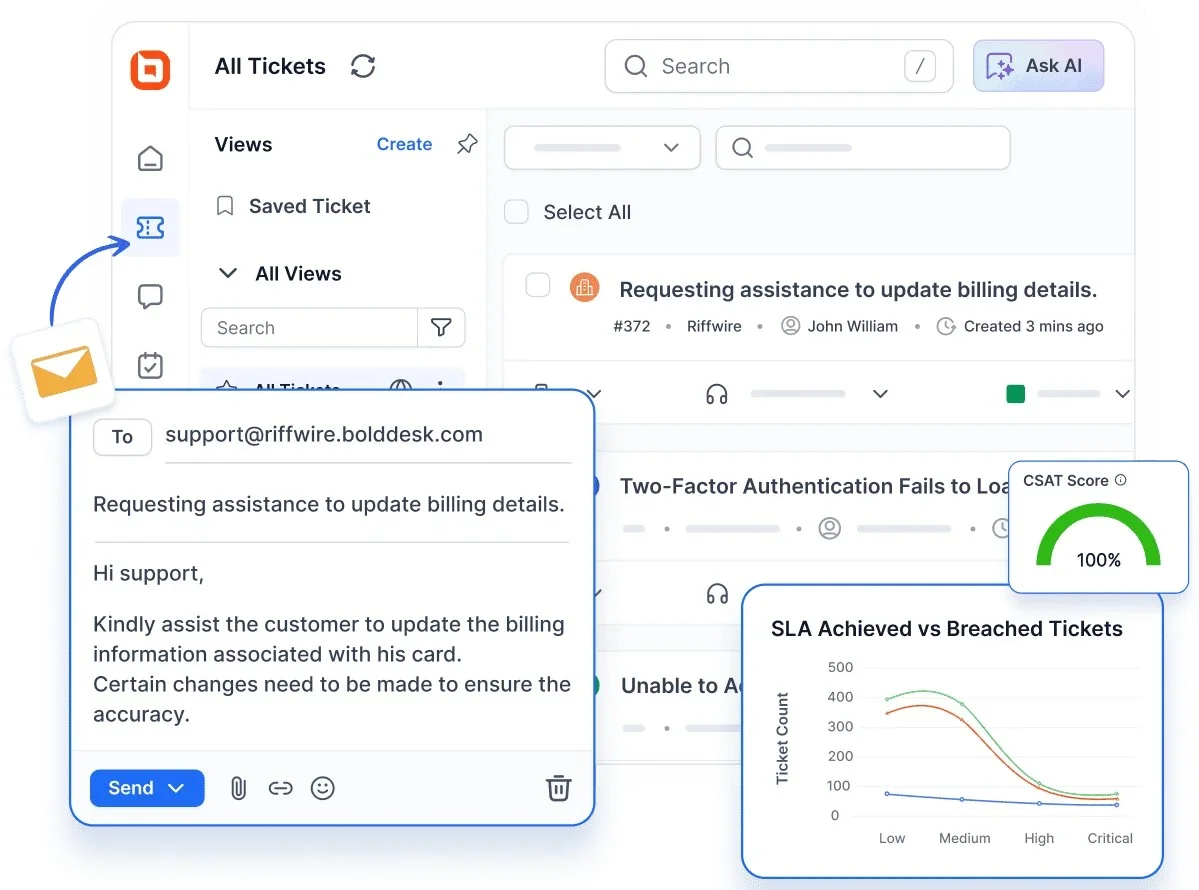
Support interactions reveal the exact friction points that impact conversions, unclear product information, shipping confusion, and recurring issues.
BoldDesk’s reporting and analytics give you a structured way to capture and review these patterns so you can fix what’s hurting conversion, reducing future tickets while increasing sales.
Key metrics to measure the success of ecommerce AI agents
Real success with ecommerce AI assistants isn’t measured by how many conversations they handle; it’s measured by how clearly they move core business metrics.
Brands adopting autonomous, AI-powered ecommerce agents often track progress across these five metrics:
Higher conversion rates
One of the clearest signs of success is an increase in conversion rates, as shoppers who receive immediate answers and personalized guidance are more likely to complete a purchase.
According to Rep AI’s 2025 ecommerce shopper behavior report, 12.3% of shoppers who engaged with AI chat made a purchase, compared to 3.1% of shoppers who did not, about 4x higher conversion rate.
Cart abandonment recovery
Reclaiming lost sales is a key driver of business growth. According to Rep AI’s 2025 Ecommerce Shopper Behavior Report, in nearly 1 million outreach chats, roughly 5% of contacted shoppers engaged, and about 35% of those who engaged went on to purchase.
While results vary, this highlights how real-time conversational engagement can re-engage customers at the exact moment purchase intent is highest.
Improved average order value
AI‑driven personalization directly lifts average order value (AOV) by making each transaction more relevant and timely.
McKinsey research shows that effective personalization can drive 5–15% revenue uplift, with top performers generating up to 40% more revenue from these efforts.
By surfacing bundles, complementary products, and timely upsell suggestions, AI agents encourage customers to add higher‑value items or consider premium options.
The result is larger baskets and greater overall customer value, turning personalization into a measurable driver of AOV growth.
Reduced support costs
In addition to driving direct revenue, AI agents improve profitability by lowering customer service costs.
According to Gartner, agentic AI could autonomously resolve up to 80% of common customer service issues by 2029, reducing operational costs by approximately 30%.
For ecommerce brands, these savings do more than improve efficiency; they create opportunities to reinvest in conversion-driving initiatives such as customer retention programs.
Early ROI that justifies scaling
How quickly AI delivers measurable returns is another strong signal of success, with research from Snowflake and Enterprise Strategy Group showing that 92% of organizations achieve positive returns from AI, often within the first year.
In ecommerce, these gains are typically driven by improvements in conversion, retention, and operational efficiency, making it easier to scale what works.
Note: The timeline for results varies based on implementation maturity, traffic volume, and customer engagement levels.
However, some ecommerce businesses begin seeing measurable improvements in support efficiency, customer satisfaction, and conversion performance within the first few months.
Turn ecommerce support into a revenue growth engine
AI-powered ecommerce support agents are no longer experimental. They are becoming the most reliable way brands achieve repeatable, scalable sales growth.
By acting in real-time across discovery, checkout, and post‑purchase moments, these AI agents can drive growth by improving conversion rates, average order value, and repeat purchases.
For brands aiming to increase revenue, the advantage comes from automating buyer-critical support moments with speed, accuracy, and consistency.
Ready to turn customer support into a growth engine? See how BoldDesk AI Agents help ecommerce brands reduce cart abandonment, automate support, and increase customer lifetime value.
Schedule a live demo or take a product tour to see how BoldDesk AI Agents can support ecommerce growth.
Related articles
- Best Ecommerce Tools to Boost Sales in 2026
- 12 Best Ecommerce Live Chat Tools for Customer Engagement
- 9 Top Ecommerce Customer Service Tips for 2026
Frequently Asked Questions
No. They augment your team by handling 70–80% of repetitive queries, allowing your human experts to focus on high-value sales and complex problem-solving.
Security depends on your implementation and vendor controls. Choose a platform that supports encryption, role-based access, audit logs, and compliance requirements relevant to your business.
Common challenges include training the AI agent for ecommerce on accurate product and policy data, integrating with existing ecommerce tools, and setting clear automation boundaries.
These are typically short‑term setup efforts that pay off quickly with faster resolutions and lower support costs.
Many businesses can begin seeing measurable impact within weeks, depending on traffic volume, data quality, and implementation scope.
An ecommerce chatbot typically follows predefined scripts to answer questions and handle simple tasks, so it’s mostly reactive. An ecommerce AI agent is more goal-driven; it can use context to make decisions and take actions across the customer journey to improve conversions and revenue, depending on how it’s implemented.