




TL;DR: Being busy doesn’t always mean being efficient. In this webinar, support leaders learned how hidden workflow bottlenecks can slow resolutions, impact customer satisfaction, and reduce team productivity. The session explored practical strategies to identify delays, improve ticket flow, and streamline support operations.
As support teams get busier, it is easy to mistake activity for efficiency. Agents may be constantly handling support tickets, yet response times can still slow down and workloads become harder to manage.
The instinctive solution is often to hire more agents. However, hidden inefficiencies such as delayed assignments, poor routing, multiple handoffs, unclear ticket ownership, and repetitive manual processes are often the real causes of support delays.
In this webinar recording, explore how support leaders can identify and eliminate these bottlenecks.
Through practical examples and a live demonstration, attendees learned how to identify bottlenecks, improve ticket flow, optimize team productivity, and deliver faster support experiences.
Watch the webinar
For a complete walkthrough of the concepts, strategies, and demonstrations covered during the session, watch the webinar recording:
Why busy support teams are not always efficient
Many support managers assume that if agents are constantly working, support operations must be running efficiently. However, activity and efficiency are not the same thing.
Customers don’t measure support by how many tickets your team closes or how busy your agents appear.
What matters to them is how quickly they receive help and how fast their issues are resolved.
In many organizations, tickets spend more time waiting than being actively worked on. Hidden delays often occur because of:
- Manual ticket assignment
- Multiple ticket handoffs between teams
- Unclear ownership
- Repetitive administrative tasks
- Missing customer information
- Knowledge silos
- Poor routing and prioritization
While each delay may seem minor on its own, together they can significantly increase response and resolution times.
Key takeaways from the webinar
The webinar highlighted practical strategies for identifying hidden delays, improving ticket flow, and creating a more efficient customer support operation.
- Busy doesn’t always mean efficient – High agent activity doesn’t necessarily translate into faster resolutions or better customer experiences.
- Hidden delays often happen while tickets are waiting – Delays commonly occur due to manual assignment, multiple handoffs, unclear ownership, queue wait times, and missing information.
- Automate routine support processes – Automating ticket assignment, categorization, acknowledgement emails, prioritization, and SLA tracking helps eliminate unnecessary delays.
- Route tickets to the right team faster – Skill-based routing and intelligent prioritization ensure requests reach the most qualified agents quickly.
- Leverage knowledge management to reduce ticket volume – Knowledge bases and AI-powered article suggestions help customers find answers faster and reduce repetitive support requests.
- Improve collaboration with unified workflows – Keeping customer context, internal notes, tasks, and team discussions in one place reduces back-and-forth communication and speeds up resolutions.
- Establish clear ownership and accountability – Tickets move faster when responsibilities are clearly defined and every request has a designated owner.
- Focus on the metrics that matter – Track first response time, resolution time, first contact resolution, SLA achievement, and customer satisfaction to measure support efficiency accurately.
These metrics help teams move beyond ticket volume and gain a more accurate understanding of overall support effectiveness.
What the live demo covered
During the live demonstration, attendees saw how BoldDesk can help teams uncover and eliminate hidden delays through:
- AI-powered knowledge base suggestions and ticket deflection
- Structured ticket intake forms to collect complete information upfront
- AI sentiment analysis for identifying urgent requests
- Skill-based ticket routing and auto-assignment
- Automated SLA management and escalations
- Unified customer context and conversation history
- Internal collaboration through notes and tasks
- Knowledge base article creation from resolved tickets
- Self-service portals for customers
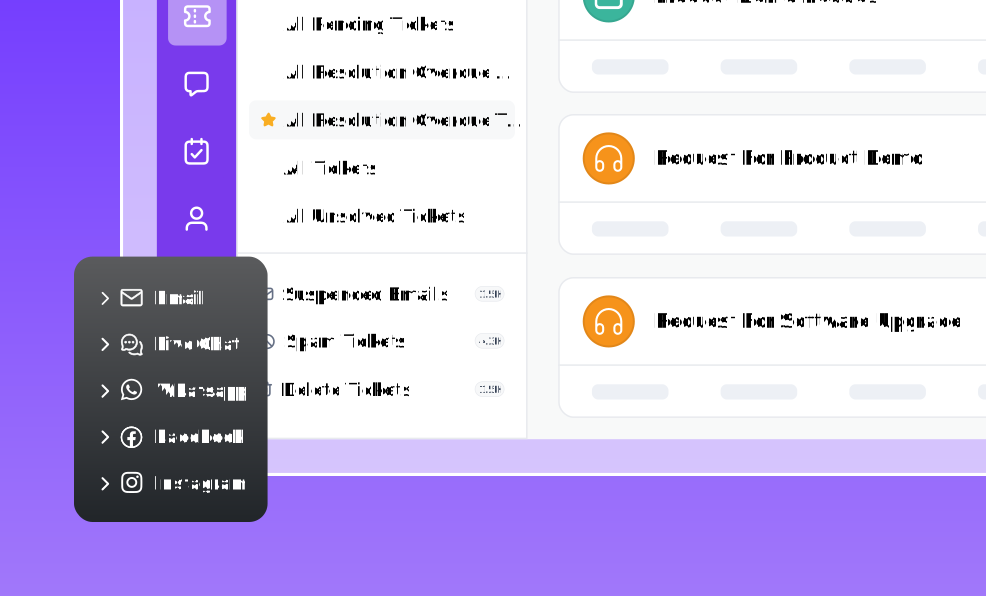
- Unified inbox management across support channels
These capabilities help support leaders create a more efficient and predictable service environment.
Best practices for reducing hidden delays
The webinar concluded with several recommendations that support leaders can implement immediately:
- Automate routine and repetitive tasks
- Standardize support workflows
- Improve knowledge sharing through a centralized knowledge base
- Prioritize and route tickets effectively
- Ensure every ticket has a clear owner
- Review support metrics regularly
- Identify workflow bottlenecks continuously
Small improvements in these areas can have a significant impact on response times, agent productivity, and customer satisfaction.
Build a support operation that eliminates delays
Support teams don’t always need to work harder, or hire more agents, to improve performance.
Often, the biggest opportunities lie in identifying and removing the hidden delays that slow ticket resolution.
By automating repetitive tasks, improving ticket routing, and giving teams better visibility into their workflows, organizations can deliver faster, more consistent customer support.
If you’re ready to reduce inefficiencies and streamline your support operations, start a free trial of BoldDesk or book a live demo to see how it can help your team.
Related articles
10 Effective Ways to Improve Team Productivity
How to Build and Organize a Customer Support Team
9 Proven Ways to Improve Agent Productivity with AI in Customer Support
Frequently Asked Questions
A busy support team may still experience long response and resolution times if tickets spend too much time waiting. Manual assignments, multiple handoffs, unclear ownership, and repetitive administrative tasks can create hidden delays that reduce overall efficiency.
Hidden delays often occur due to manual ticket routing, queue wait times, missing customer information, multiple team transfers, knowledge silos, and a lack of clear ownership. These inefficiencies can slow down ticket resolution even when agents are actively working.
Automation can streamline routine tasks such as ticket assignment, categorization, prioritization, acknowledgement emails, and SLA tracking. This reduces manual effort, improves consistency, and allows agents to focus on resolving customer issues faster.
A well-organized knowledge base helps customers find answers independently and enables agents to resolve issues more quickly. It also reduces repetitive tickets and minimizes reliance on individual team members for information.
Instead of focusing only on ticket volume, support teams should monitor key performance indicators such as first response time, resolution time, first contact resolution, SLA achievement, and customer satisfaction (CSAT) to gain a more complete view of support performance.