


TL;DR: Customer complaints are valuable opportunities to identify service gaps, improve customer experiences, and strengthen customer loyalty. Learn about the most common types of customer complaints, real-world examples, and proven strategies to resolve them effectively..
No matter how excellent your product or service is, customer complaints are inevitable. From long wait times and poor customer service to product defects and billing errors, customers voice their frustrations whenever their expectations aren’t met.
The way your business responds to these complaints can significantly impact customer satisfaction, loyalty, and brand reputation. When handled effectively, complaints become opportunities to improve your products, strengthen customer relationships, and build trust.
In this blog, we’ll cover the most common customer complaints, examples of each complaint type, proven strategies for resolving them, and best practices for delivering exceptional customer service.
What are customer complaints?
Customer complaints refer to the negative feedback that customers give regarding a product, service, or experience they received from a company or brand.
These complaints can be submitted through surveys, emails, social media reviews, community forums, or online review sites.
Customer complaints can arise from a variety of issues, such as product defects, bad customer service, billing errors, or any other aspect that does not align with the customer’s expectations.
Why Customer Complaints Matter
Customer complaints are more than just expressions of dissatisfaction, they provide valuable insights into areas where your business can improve.
A study by Forbes reports that 96% of customers are unlikely to return to a business that has disappointed them.
When handled effectively, complaints can help organizations strengthen customer relationships, improve operations, and drive long-term growth.
Here are some key benefits of addressing customer complaints promptly:
- Identify service gaps: Complaints help uncover weaknesses in customer support, processes, or communication that may otherwise go unnoticed.
- Improve products and services: Customer feedback highlights recurring issues, allowing businesses to make targeted improvements and deliver better experiences.
- Increase customer retention: Customers are more likely to remain loyal to businesses that listen to their concerns and resolve issues quickly.
- Reduce customer churn: Addressing complaints proactively can prevent frustrated customers from switching to competitors.
- Strengthen brand reputation: Demonstrating responsiveness and accountability helps build trust and shows customers that their opinions matter.
- Enhance the customer experience: Learning from complaints enables businesses to streamline operations, remove friction points, and create a smoother customer journey.
Ultimately, customer complaints should be viewed as opportunities rather than setbacks. By listening to customer feedback and taking corrective action, businesses can turn negative experiences into positive outcomes and foster stronger customer loyalty.
Types of customer complaints
Understanding each type of customer complaint can help businesses identify recurring issues, improve service quality, and respond more effectively to customer concerns.
Below are some of the most common customer complaints you may encounter.
Delay complaints
Having to remain on hold on phone calls for extended periods of time may not be practical for customers who are busy.
When the wait for assistance exceeds expectations, it can result in dissatisfaction and complaints.
These complaints can also occur due to late product shipments, delayed project deliverables, or slow responses from support teams.
Example:
“I’ve been waiting for over 30 minutes and still haven’t been able to speak with a support representative.”
How to resolve and prevent this customer complaint
- Analyze call volume patterns and consider implementing callback options to reduce wait times.
- Update customers on the status of their orders, anticipated delays, and the new expected timelines.
- Set realistic initial timelines and prioritize tasks and projects based on their importance and urgency.
- Analyze the causes of delays and address them by streamlining operations, adopting new technologies, or removing bottlenecks.
- Offer compensation, such as discounts or freebies to help alleviate frustration.
Delivery complaints
Delivery complaints are common in e-commerce and logistics businesses. Issues may include delayed, damaged, missing, or incorrect deliveries, all of which can negatively impact customer satisfaction.
Example:
“My package was supposed to arrive three days ago, but I still haven’t received it.”
How to resolve and prevent this customer complaint
- Provide customers with accurate delivery estimations and real-time tracking information.
- Ensure that items to be delivered are packaged securely.
- Have an efficient return policy that allows customers to send back incorrect items at no extra cost.
- Apologize to customers and offer refunds for lost items.
Return and refund complaints
Customers become frustrated when refunds take too long, return policies are unclear, or requests are denied unexpectedly.
Example:
“I returned the product two weeks ago, but I still haven’t received my refund.”
How to resolve and prevent this customer complaint
- Make return and refund policies easy to find and understand.
- Set realistic refund processing timelines.
- Keep customers informed throughout the refund process.
- Process refunds promptly whenever possible.
- Train support agents on return and refund procedures.
Complaints due to miscommunication
Miscommunication can result from unclear instructions, language barriers, inconsistent information, or poor customer communication. These misunderstandings often lead to customer churn and distrust.
Example:
“Your website said one thing, but the support agent told me something completely different.”
How to resolve and prevent this customer complaint
- Actively listen to customers, understand their message, respond appropriately, and archive the conversation for future reference.
- Invest in regular training for customer service representatives to enhance their communication skills.
- Implement a contact management systemto keep track of customer interactions and history, which can help reduce miscommunication.
- Use canned responsesfor common inquiries to provide consistent and accurate information.
- Offer multilingual supportwhen possible to cater to customers from a diverse marketplace.
Product or service quality complaints
Quality complaints occur when products or services fail to meet customer expectations. These issues may involve defective products, service disruptions, missing features, or poor performance.
Example:
“The product stopped working after only two weeks of use.”
Handling these complaints effectively helps maintain customer loyalty and protect brand perception and reputation.
How to resolve and prevent these customer complaints
- Clearly communicate policies, procedures, and what the customer should expect.
- Identify the root cause of the problem and propose feasible solutions.
- Analyze complaints to understand where you can improve your products or service.
- Follow up with the customerafter solving their issue to make sure they’re still satisfied.
Availability or out-of-stock complaints
These complaints occur when products, services, or features are unavailable despite customer expectations.
Example:
“Your website showed the item as available, but I was notified later that it was out of stock.”
How to resolve and prevent this customer complaint
- Display accurate inventory and availability information.
- Update stock levels in real time.
- Notify customers immediately when availability changes.
- Offer suitable alternatives when products are unavailable.
- Improve forecasting and inventory management processes.
Complaints about unsupportive agents
Customers frequently complain when support agents appear rude, unempathetic, unhelpful, or unable to resolve their issues effectively.
Example:
“The support agent seemed uninterested in helping me and didn’t address my concern.”
How to resolve and prevent this customer complaint
- Provide comprehensive training to agents to ensure they have good product knowledge and customer service skills.
- Conduct regular performance reviews to improve agent productivity.
- Promote a customer-centric culture that values empathy, accountability, and customer satisfaction.
- Recognize and reward agents who consistently deliver excellent service.
Complaints arising from having to repeat information
Customers become frustrated when they need to explain the same issue multiple times, especially after being transferred between departments or agents.
Example:
“I’ve already explained this problem to three different agents. Why do I have to repeat everything again?”
Repeated requests for the same information can make customers feel that the business is not listening to them, resulting in a poor customer experience and lower satisfaction levels.
How to resolve and prevent this customer complaint
- Implement shared inbox software or help desk software that centralizes customer information.
- Ensure agents document conversations before transferring tickets.
- Give support teams access to complete customer interaction histories.
- Use CRM and ticketing systems to provide context across channels.
Billing complaints
Billing complaints occur when customers experience unexpected charges, invoicing errors, duplicate payments, or a lack of pricing transparency.
Example:
“I was charged twice for the same purchase, and nobody has explained why.”
How to resolve and prevent this customer complaint
- Provide clear and detailed explanations of all charges.
- Communicate pricing and fees before customers make a purchase.
- Audit billing systems regularly to identify errors.
- Correct billing mistakes quickly and issue refunds when necessary.
Complaints due to a lack of self-service options
Modern customers often prefer resolving issues on their own. Complaints arise when businesses do not provide easily accessible self-service resources.
Example:
“I couldn’t find any documentation or FAQs, so I had to contact support for a simple question.”
How to resolve and prevent this customer complain
- Invest in user-friendly self-service resources such as knowledge base software, FAQ pages, and community forums.
- Keep self-service content updated and searchable.
- Use analytics to identify information customers frequently search for.
- Offer AI-powered chatbots to help customers find answers quickly.
Poor customer service complaints
Customers may complain when they receive slow responses, unhelpful support, lack of professionalism, or poor issue resolution.
Example:
“I’ve contacted support multiple times, but nobody has been able to resolve my issue.”
How to resolve and prevent this customer complaint
- Establish customer service standards and response-time goals.
- Regularly train agents on communication and problem-solving skills.
- Monitor customer satisfaction scores and feedback.
- Review support interactions to identify coaching opportunities.
- Empower agents to make decisions that speed up issue resolution.
How to handle customer complaints
Regardless of a business’s best efforts, its customers will have complaints at some point in the relationship.
The following complaint resolution process can help support teams address customer concerns more effectively and improve customer satisfaction.
1. Acknowledge the complaint
Respond promptly and let the customer know that their complaint has been received. A quick acknowledgment reassures customers that their concerns are being taken seriously and helps build customer trust.
Example:
“Thank you for bringing this issue to our attention. We’re reviewing it and will work to resolve it as quickly as possible.”
2. Understand the issue
Listen carefully to what the customer has to say and ask relevant questions to gather all the necessary information. Taking notes can help you identify patterns and uncover the root cause of the problem.
Some useful questions include:
- When did the issue occur?
- What outcome were you expecting?
- Has this issue happened before?
- Can you provide additional details, screenshots, or order information?
By actively listening, you gain a deeper understanding of the complaint and increase your chances of creating a happy customer.
3. Assess the complaint severity
Not all complaints require the same level of urgency. Determine whether the issue relates to:
- Product or service quality
- Delivery delays
- Billing errors
- Poor customer service
- Technical problems
- Miscommunication
Prioritizing complaints helps support teams allocate resources and resolve critical issues faster.
4. Investigate the root cause
Review previous interactions, order history, service records, or support tickets to understand what caused the issue.
A thorough investigation ensures that you address the actual problem rather than temporarily treating the symptoms.
5. Offer a sincere apology
Regardless of who caused the issue, offering a genuine apology shows empathy and professionalism. A sincere apology demonstrates that you care about the customer’s experience and are committed to making things right.
If communicating by email, send an apology email that clearly acknowledges the issue, explains the next steps, and outlines how the problem will be resolved.
6. Provide an appropriate solution
Once you’ve identified the cause of the complaint, propose a fair and reasonable solution.
Depending on the situation, this may include:
- A refund
- A replacement
- Technical support
- Account credits
- Service recovery measures
Providing a clear path forward can help rebuild customer trust and improve satisfaction.
7. Follow up and thank the customer
After resolving the issue, follow up to ensure the customer is satisfied with the outcome.
Thanking your customer for bringing the issue to your attention demonstrates that you value their feedback and view complaints as opportunities for improvement.
Example:
“Thank you for sharing your concerns with us. Your feedback helps us improve our products and services.”
8. Document and learn from complaints
Document complaint details, root causes, actions taken, and outcomes. Effective customer complaint management helps businesses:
- Identify recurring issues
- Improve products and services
- Train support teams
- Reduce customer churn
- Enhance customer experiences
By treating complaints as learning opportunities, businesses can continuously improve their operations and create more satisfied, loyal, and happy customer.
How a Complaint Management System Helps Resolve Customer Complaints
Customer complaint management software helps support teams track, categorize, prioritize, and resolve customer complaints from a centralized support dashboard.
BoldDesk is a customer support platform for addressing customer complaints in an effective manner.
The following are some of the ways BoldDesk helps handle your customer complaints:
Organize customers’ complaints effectively
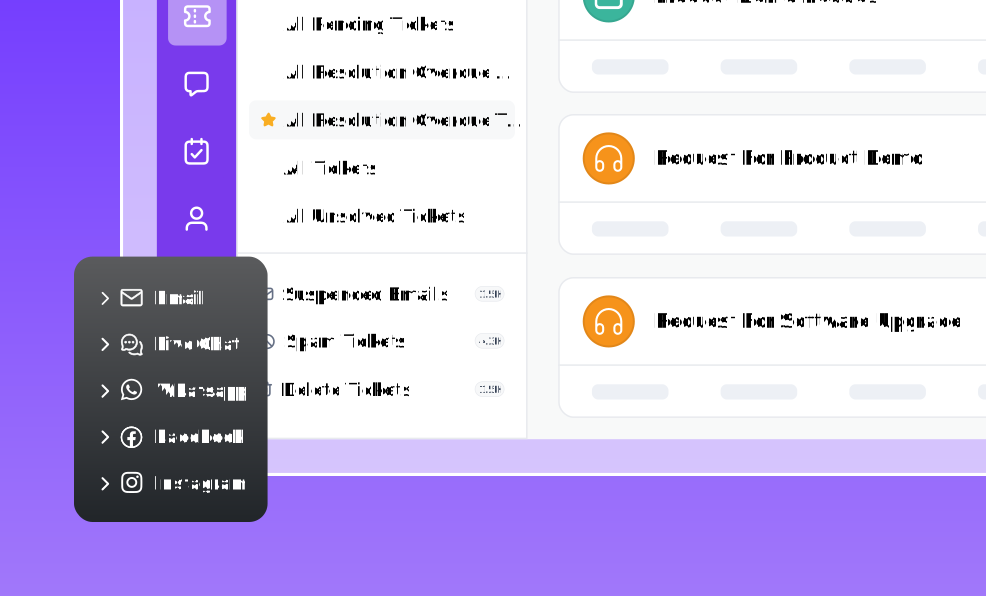
BoldDesk provides a help desk ticketing system that converts all incoming support emails into tickets. Customers can respond to their tickets through email.
By managing customer data from a central location, your staff can access the most recent information. With this, you can eliminate the need to track multiple responses and threads.
You can also categorize tickets with tags and private notes based on customer requirements.
By applying advanced filter rules to tickets, you can organize the tickets as needed and assign them to the appropriate support agent.
Send quick responses
Netomi reports that for 61% of consumers, an outstanding customer support experience involves a short time to resolution.
By using canned responses, you can send quick responses to common customer complaints without any mistakes.
Perfection in a reply is important because it increases customers’ confidence in your support team.
By eliminating chances for mistakes to be introduced, you can more accurately and effectively resolve customer complaints.
BoldDesk also lets you set priority levels for tickets so that critical issues can receive replies first.
Send reminders regarding unsolved complaints
A service-level agreement (SLA) sets response and resolution due dates based on business hours.
Most businesses have customers in various time zones. BoldDesk allows you to create business hours and holiday lists to fit your team’s schedule.
An SLA helps set ideal response times and send reminders about assigned issues and unsolved complaints via email.
Reminders help prevent customer complaints from remaining unassigned or unaddressed for a long time.
Sending a reminder allows agents to focus on resolving customer issues and speeds up the resolution process.
Analyze the customer’s complaints
BoldDesk’s reporting and analytics dashboards make managing a support team easier. For instance, a ticket conversation report shows messages updated by customers and agents across all communication channels in one place.
By examining the agents’ responses to customers, you can identify agents who need more training and add a tag or private note inline for follow-up.
Accordingly, these reports help support managers in monitoring agent performance and identifying areas that need improving to handle customer complaints better.
Additionally, the customer satisfaction (CSAT) report provides CSAT scores, survey response rates, and customer feedback and ratings.
Using filters, you can categorize CSAT data by agent, category, contact, and contact group. This helps identify customers’ issues and agents that may need additional help.
Reduces the resolution time of customer complaints
BoldDesk auto-assignment rules direct incoming tickets to the appropriate agents in the organization based on ticket attributes.
Assigning tickets to the correct team based on the conditions configured avoids unnecessary redirecting between teams.
By eliminating manual effort at each step of the ticket life cycle, agents can focus on resolving customer issues.
Consequently, this helps support agents resolve issues on time and thereby reduces ticket resolution times.
Turn customer complaints into customer loyalty and retention
Handling customer complaints is a primary function of a company’s support team, and handling them effectively can lead your company to growth. We build products that you can customize according to your present and future needs.
Without a doubt, BoldDesk can help you solve your customers’ complaints easily. Contact us to arrange a live demo to experience the enhanced capabilities BoldDesk can offer your support team. Or, sign up for a 15-day free trial with instant access today.
What strategies do you use to manage customer complaints?
Feel free to share in the comments section below.
Related articles
- 10 Ultimate Strategies of How to Identify and Overcome Customer Pain Points
- 10 Examples of Bad Customer Service and How to Fix Them
- Customer Expectations: Types, Strategies, and More
Frequently asked questions
Some of the most common customer complaints include long wait times, delivery delays, poor customer service, billing issues, product defects, miscommunication, refund delays, and the need to repeat information multiple times.
Customer complaints typically arise when a product, service, or support experience fails to meet customer expectations. Common causes include poor communication, delayed responses, quality issues, pricing confusion, and inadequate support.
Businesses should listen actively, acknowledge the concern, apologize sincerely, investigate the issue, provide a fair solution, and follow up to ensure customer satisfaction. Following a structured complaint resolution process helps improve outcomes and customer trust.
Customer feedback includes both positive and negative opinions about a product, service, or experience. A customer complaint is a specific type of feedback that expresses dissatisfaction and usually requires resolution.
Businesses can reduce customer complaints by setting clear expectations, improving communication, training support teams, monitoring customer feedback, providing self-service resources, and using customer support software to streamline issue resolution.