


TL;DR: Generative AI in customer service helps teams scale faster, more consistent support by automating recurrent tasks like routing, summarization, and response generation. When paired with strong knowledge bases, human oversight, and safeguards, it improves efficiency, reduces costs, and enhances customer experience without replacing human agents.
Customer expectations for speed, 24/7 availability, and personalization keep rising, while traditional support models struggle to scale without increasing costs or sacrificing service standards.
That’s why more organizations are adopting generative AI in customer service to modernize operations and manage higher volumes efficiently.
Unlike rule-based automation, generative AI enables teams to handle a broader range of customer requests across channels, rather than relying on rigid, predefined workflows.
Reuters reports that AI-powered tools are already helping some organizations handle thousands of support requests per day, with significant reductions in resolution times of up to 87%.
When paired with strong knowledge grounding, clear guardrails, and thoughtful escalation to human agents, generative AI can improve efficiency without compromising accuracy or empathy.
In this article, we’ll explore the key use cases for generative AI in customer service, along with the key benefits and risks teams should understand to adopt it responsibly.
What is generative AI in customer service?
Generative AI in customer service refers to artificial intelligence systems that use large language models (LLMs) to generate natural‑language responses to customer queries.
It interprets context, intent, and conversation history to produce relevant responses in real time.
By grounding responses in knowledge sources such as help articles, past tickets, and internal documentation, generative AI supports tasks like response drafting and conversation summarization while escalating complex or sensitive issues to human agents.
Why is generative AI for customer service important?
Generative AI customer service is transforming how support teams operate by delivering measurable improvements in efficiency, satisfaction, and scalability across industries.
The following are the key benefits you can gain by adopting generative AI in customer service.

- Reduces operational costs: By handling high-volume, routine queries, generative AI lowers customer support costs per interaction, helping organizations scale support operations more sustainably as customer demand grows.
- Adapts seamlessly to business growth: Whether expanding into new markets, launching products, or managing seasonal demand spikes, generative AI scales to handle increasing support volumes without delays or service degradation.r requests resolved instantly, meeting rising demands for real-time support.
- Expands support coverage: Generative AI handles peak demand, after‑hours inquiries, and multilingual interactions, extending coverage without increasing staffing levels or requiring language‑specific teams.
- Unlocks actionable operational insights: Generative AI analyzes customer interactions to surface content gaps, recurring issues, and sentiment trends, enabling teams to make data‑driven improvements to service quality over time.
How to use generative AI in customer service
Modern businesses are leveraging generative AI in support operations across multiple touchpoints to create seamless, intelligent customer experiences.
Here are some practical ways to provide generative AI customer service:
Intelligent inquiry triage and routing
In modern customer service, speed and precision are critical.
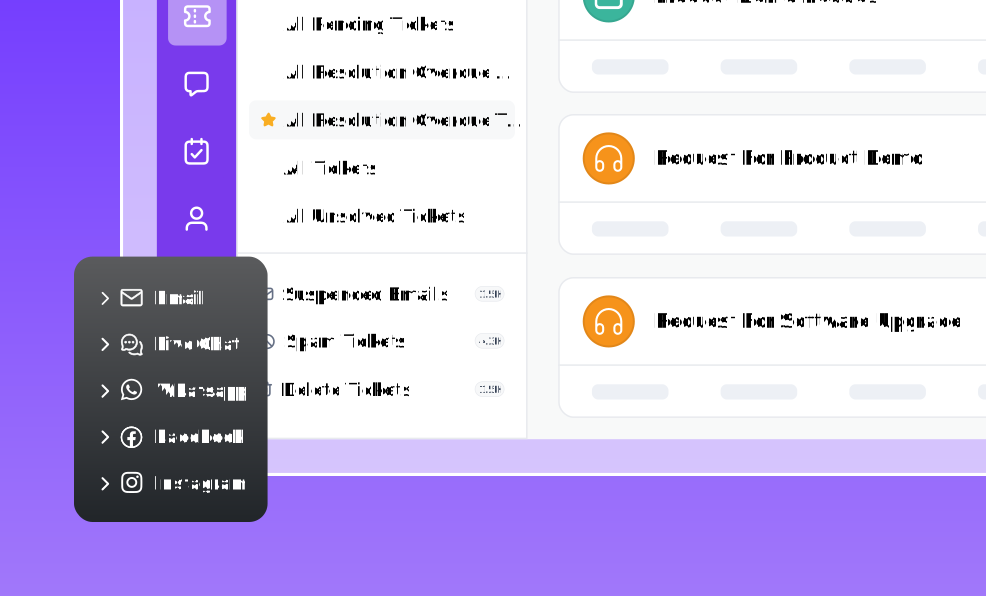
Generative AI enables real-time triage and intelligent routing by analyzing incoming messages and directing them to the most appropriate resolution path, whether it’s customer self‑service content, an AI agent, or a human support representative.
Here’s how it works:
- Analyzes customer messages for intent, urgency, and complexity.
- Engages users to capture key details like account info, prior steps, or error messages.
- Suggests relevant help articles, FAQs, or resources for straightforward queries.
- Automatically escalates complex or sensitive issues to the appropriate human agents.
- Generates concise conversation summaries to ensure smooth agent handoffs.
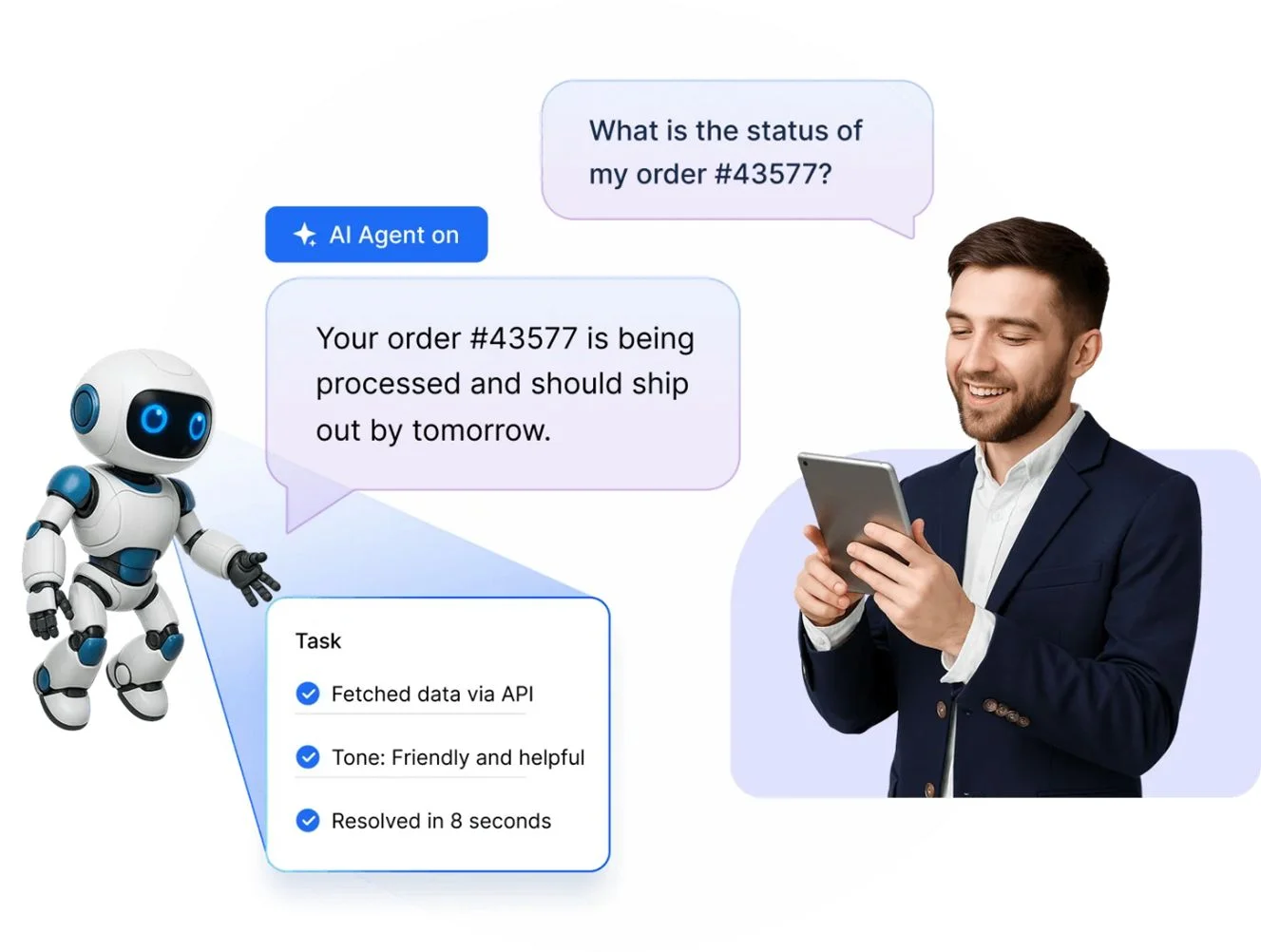
For example, customer service platforms apply these capabilities through AI Agents that escalate complex issues to human teams.
Advanced sentiment and intent detection
Customers express issues in different ways, and responding with a one-size-fits-all tone can make bad situations worse.
Manually assessing emotion and intent in real time is difficult at scale, especially across high ticket volumes.
Generative AI enables support teams to interpret customer sentiment and contextual signals behind customer messages so they can respond with the appropriate tone, empathy, and urgency.
Here’s how it works:
- Detects emotional signals such as frustration, satisfaction, or urgency across tickets in real time.
- Identifies the goal of each message, such as a question, complaint, or refund request.
Guides agents to adjust response tone and phrasing based on emotional context, ensuring replies are empathetic and context aware.
Example: Airline customer support
A customer messages an airline’s support team:
“I’ve been waiting for hours and still no update on my flight. This is extremely frustrating!”
Generative AI flags high frustration and urgency, identifies the intent as a complaint and request for flight information, and suggests an empathetic response, guiding the agent to reply with:
“I’m really sorry for the delay and the inconvenience caused. Let me check your flight status right away and get back to you with an update.”
This approach helps the customer feel acknowledged while enabling the agent to respond quickly and appropriately.
Content creation and optimization
Keeping support content accurate, up to date, and aligned with customer needs is essential, but maintaining it manually can be time‑consuming.
Generative AI customer service lets support teams create, improve, and maintain knowledge bases by learning from real customer interactions and identifying where documentation needs to be updated.
It enables teams to:
- Generate and update FAQs, troubleshooting guides, and knowledge base articles based on recurring customer questions and trends.
- Identify gaps in documentation by analyzing failed searches or repetitive queries.
- Refresh outdated articles to reflect current processes, features, or policies.
- Summarize long or complex articles into clear, easy-to-read formats for faster knowledge consumption.
- Organize and tag content to reduce duplication and improve discoverability across the knowledge base.
As part of this workflow, generative AI can also assist with optimizing article titles and descriptions to improve search visibility, supporting both self‑service and internal agent access.
This is where modern customer service tools put generative AI into practical, day‑to‑day use.

Seamless multilingual support
Supporting a diverse customer base across multiple languages without the right tools can be challenging.
While hiring agents fluent in different languages helps bridge communication gaps, it can be resource-intensive and still lead to inconsistencies.
Generative AI in customer service enhances multilingual customer support by enabling teams to communicate professionally with clients in any language at scale.
It ensures that every message stays on-brand, culturally relevant, and emotionally appropriate, regardless of the language.
It can:
- Translate customer messages and agent responses in real time with high accuracy and contextual awareness.
- Maintain tone and brand voice across languages to ensure consistent customer experiences.
- Support agents by providing language-specific suggestions and corrections, even if they’re not fluent.
- Supports multilingual self-service by translating help articles across multiple languages.
For regulated, legal, or high‑stakes customer interactions, human review remains essential to ensure accuracy, compliance, and appropriate nuance.
AI-powered support systems apply these capabilities to help teams deliver consistent multilingual support.

Intelligent response generation
During live support conversations, agents often spend time searching through past tickets, knowledge base articles, or internal documentation to craft accurate responses.
This slows down ticket resolution times and can lead to inconsistent replies, especially during high‑volume periods.
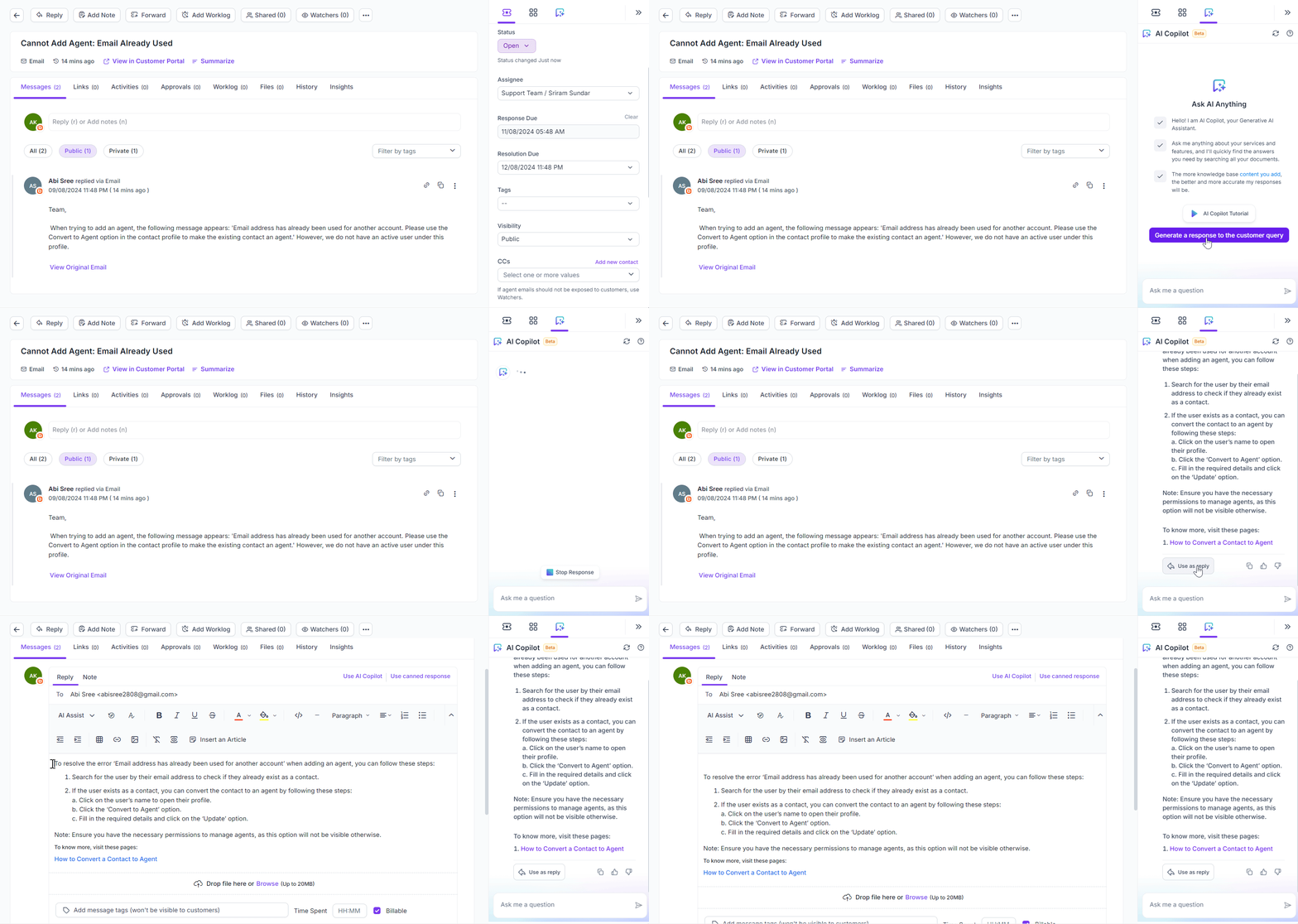
Generative AI in customer service analyzes the current message alongside ticket history, customer details, and relevant knowledge sources to suggest clear, accurate replies that agents can review and send.
This lets you:
- Generate initial response drafts grounded in conversation context and prior interactions.
- Pull in relevant information from knowledge bases and past tickets without manual searching.
- Maintain consistency in tone and messaging across agents and channels.
- Reduce response time while keeping agents in control of final replies.
In practice, teams invest in tools like BoldDesk, which supports this approach to assist agents with real‑time, context‑aware reply suggestions.
Tone adjustment and reply refinement
Not every response needs to be written from scratch. In many cases, agents already have a draft but need to adjust tone, clarity, or structure to match the situation and brand expectations.
With generative AI in customer service, agents can rework replies to sound more empathetic, concise, or professional, while staying aligned with company guidelines and the customer’s communication style.
This enables teams to:
- Adjust tone to suit different scenarios, such as frustration, urgency, or informational requests
- Rephrase responses for clarity, brevity, or professionalism without changing intent
- Ensure replies consistently reflect brand voice and messaging standards
- Reduce errors and variability across agents while keeping human control intact
Ticket conversation summarization
Customer support tickets often involve long, detailed conversations, especially when issues are complex or unfold over multiple interactions.
When tickets are escalated across agents or departments, from technical support to sales, important details can easily be lost, leading to delays.
Generative AI in customer service helps streamline support workflows by automatically generating clear, concise summaries of lengthy or complex customer interactions.
For example, platforms like BoldDesk use generative AI to create concise ticket summaries that improve handoffs.
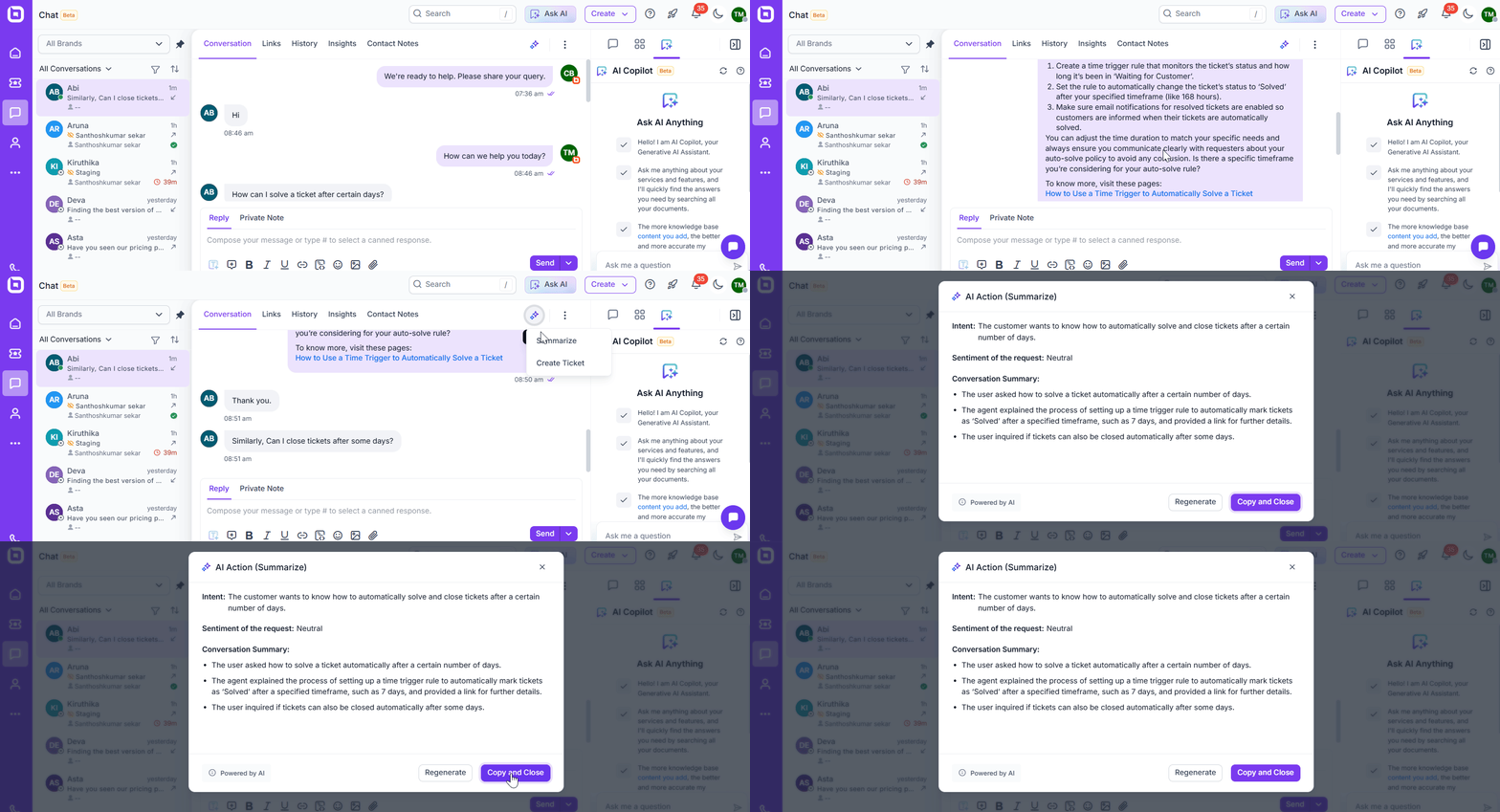
These AI-generated summaries reduce delays and improve resolution quality, ensuring that every agent involved:
- Quickly understands the issue.
- Sees the actions already taken.
- Knows the next steps to follow.
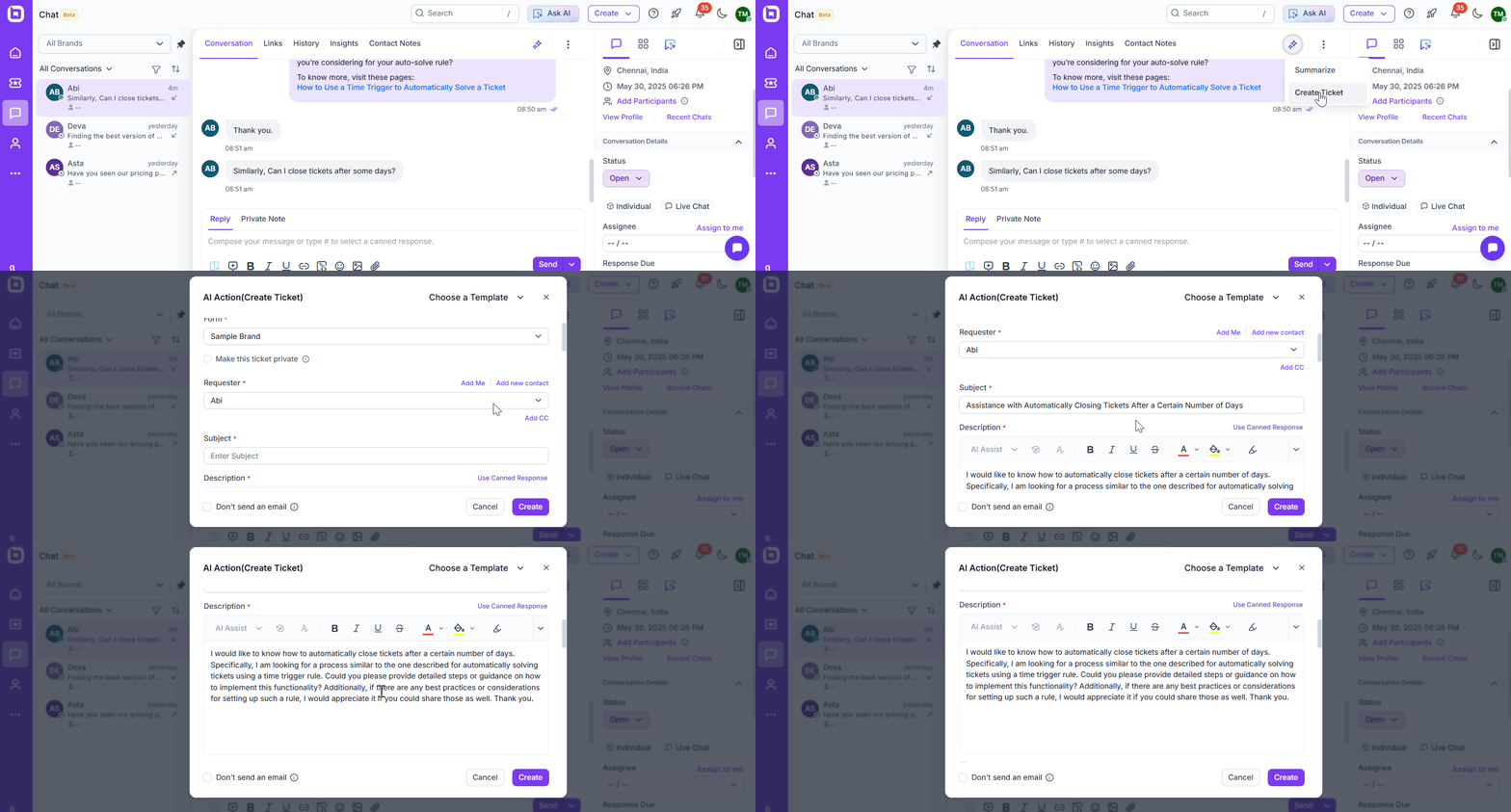
Autofill customer support tickets
Creating tickets from incoming requests is time-consuming and prone to errors. Agents often need to extract key details from conversations while juggling multiple channels, which can lead to incomplete ticket data.
Generative AI for customer service can populate ticket fields based on the content of customer interactions, reducing manual data entry and ensuring accuracy.
This streamlines ticket creation by:
- Extracting details such as chat history, issue type, product category, and urgency from customer conversations.
- Automatically filling ticket fields based on customer communication.
- Improving ticket routing and prioritization by ensuring accurate categorization.
- Supporting more reliable reporting, analytics, and SLA tracking through consistent data.
- Reducing manual errors while increasing agent productivity.
This functionality is available in help desk tools, where AI can automatically populate ticket fields from conversations.
What are the risks and challenges of generative AI in customer service?
Like any other powerful technology, the impact of generative AI in customer service depends on how carefully it is implemented and governed.
Understanding the risks involved helps teams adopt it responsibly, set realistic expectations, and avoid common pitfalls.
Below are some of the most important challenges to consider.
Inaccurate or misleading responses
In customer service, even small inaccuracies can lead to frustration, repeated contacts, or loss of trust.
Because generative AI systems generate responses based on patterns, incorrect or outdated answers can occur when confidence checks, validation mechanisms, or human review are missing
Solution:
- Regularly update and validate knowledge sources the AI relies on.
- Define clear escalation paths to human agents for uncertain or high-risk cases.
Over‑automation at the expense of human judgment
While automation improves efficiency, relying too heavily on AI can remove the human empathy and judgment needed for complex, emotional, or sensitive situations.
Solution:
- Define “must-escalate” categories, such as billing disputes, cancellations, or legal matters.
- Make human support easy to access and clearly visible to customers.
Data privacy and security concerns
Generative AI systems often process customer data to deliver personalized support, raising concerns around data privacy, access control, and regulatory compliance, such as GDPR and other regional data‑protection laws.
Solution:
- Apply role-based access controls.
- Redact or mask sensitive fields.
- Ensure AI vendors or models align with data handling policies.
Bias and tone inconsistencies
AI models may inherit biases from training data or generate responses that miss cultural or contextual nuance.
Even factually correct replies can harm customer perception if the tone is inappropriate.
Solution:
- Establish tone guidelines and approved response patterns.
- Conduct ongoing quality assurance, including multilingual and regional reviews.
Reliance on poor-quality knowledge sources
Generative AI is only as effective as the information it can access.
Even well‑configured AI systems depend on accurate, centralized, and well‑maintained knowledge sources.
Poor documentation increases the risk of incorrect responses and repeat interactions.
Solution:
- Maintain a single source of truth for support content.
- Assign clear content ownership for knowledge base maintenance.
- Regularly review and update high-traffic support articles.
Lack of transparency and explainability
When agents and teams cannot understand why an AI generated a response, it becomes difficult to audit decisions, correct errors, or build customer trust in AI‑assisted workflows.
Solution:
- Log source references used in responses.
- Preserve conversation history.
- Provide agent‑facing context explaining why an answer was generated.
Prompt injection and malicious user behavior
Generative AI systems can be manipulated through carefully crafted inputs that attempt to bypass safeguards, extract sensitive information, or trigger unintended actions.
Solution:
- Restrict sensitive actions behind permissions.
- Validate and sanitize inputs.
- Limit model access to systems and data.
- Regularly test against known prompt‑injection and bypass attempts.
Drive support excellence with generative AI in customer service
Generative AI customer service creates the most value when it is applied to real operational bottlenecks such as routing, drafting, summarization, multilingual support, and knowledge management, while keeping humans in control of complex or sensitive cases.
When used responsibly, it enhances agent productivity, improves consistency, and delivers more personalized customer experiences across every channel.
Solutions like BoldDesk help support teams put these capabilities into practice by automating routine work, streamlining workflows, and supporting agents where it matters most.
The result is a customer service operation that is scalable, efficient, and human‑centric.
Want to see how generative AI can work for your team?
Start a free trial to explore these capabilities firsthand or book a live demo to see how BoldDesk fits into your existing support workflows.
You can also reach out to us for any inquiries.
Feel free to share your questions or experiences in the comments. We’d love to hear from you.
Related articles
- Conversational AI for Customer Service: Types, Use Cases, and Benefits
- What is an AI Knowledge Base? Features, Benefits, and Use Cases
- AI Customer Service Software: 12 Best Options for Support Teams
- 7 Best Ways to Utilize AI for Customer Experience
FAQs on generative AI in customer service
Measure performance using customer experience metrics such as first response time, average handle time (AHT), resolution time, customer satisfaction, and net promoter score.
For AI-specific quality, track deflection rate, escalation rate, and accuracy and quality (QA) scores from regular human reviews.
No. Generative AI in customer service is best used to support agents and automate routine requests, not to replace humans.
AI can draft replies, summarize tickets, and resolve common FAQs, but human agents remain essential for complex troubleshooting, exceptions e.g., billing or refunds, and emotionally sensitive situations where empathy in customer service and judgment matter.
Implementation timelines vary based on system readiness and complexity, but many organizations begin seeing results within weeks.
A phased rollout helps teams adopt generative AI gradually while maintaining service quality and control.
Conversational AI is the broader category of systems that conduct customer-facing conversations, often using intent detection, dialogue flows, and integrations.
Generative AI refers to LLM-based systems that generate responses in natural language.
In customer service, conversational AI may use generative AI to produce answers, ideally grounded on a knowledge base, to handle more varied questions than traditional rule-based chatbots.
Use knowledge-base grounding (retrieval augmented generation or RAG) to restrict responses to approved sources.
Set confidence thresholds, route uncertain cases to a human agent, and regularly review real support tickets through QA sampling to identify gaps and improve accuracy over time.
Industries with high customer interaction volumes, such as SaaS, eCommerce, telecommunications, finance, travel, and healthcare, benefit significantly from generative AI in customer service.
These sectors use it to scale support, improve response times, and maintain consistent service quality across multiple channels and regions.